AI art looks good enough? What professional game artists do that AI doesn't
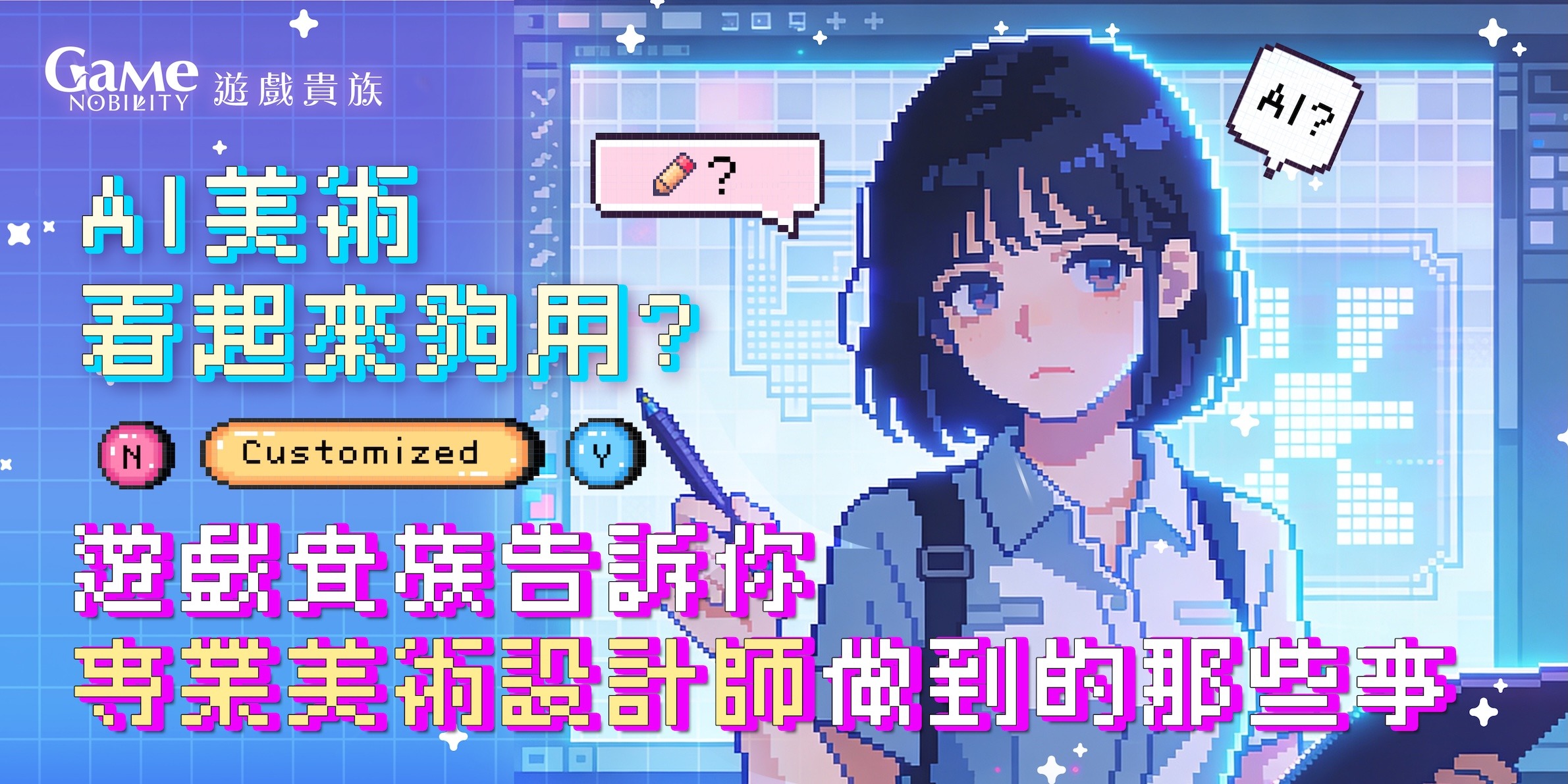
When clients discuss a game development budget, many stop at the art and ask: "Can we use AI for this part?"
We don't just say no. In practice, AI really can be used in some situations, and we use it in our own work too.
But before you go ahead, two things are quite likely to happen. Today GameNobility will tell you what they are!
Character design: AI impresses at first glance, but later almost everything has to be redone
One project was a chibi, Japanese-style character design. It needed full-body art for several characters, with a refined style and a memorable brand touch.
The client first chose AI generation. The first drafts looked striking, with rich lighting and lots of detail. At first glance they really were good.
But problems soon appeared.
Generate the same character ten times and the eyes are drawn differently every time. In anime-style character design this is fatal. The eyes are the soul of a character and the key to making players remember it. Every time AI generates, it runs inside a fixed style framework. It cannot adjust the direction of the gaze or the proportions of the details to fit this character's personality, her warmth or the impression she gives.
AI adds a lot of diamond-shaped highlight blocks on its own, and making them consistent across all characters takes a lot of extra training. AI also tends to overcomplicate the balance of shadows and gradients, while this project needed clean, balanced visuals, which is exactly what AI finds hardest to control.
In the end, the conclusion was: character style cannot be customized with AI.
From line art and coloring to the finished piece, the difference between a human artist's process and AI-generated results is obvious at a glance.
The more requirements you list, the more likely AI is to miss something. The time spent on endless tweaking costs more than simply having a designer do it from the start.
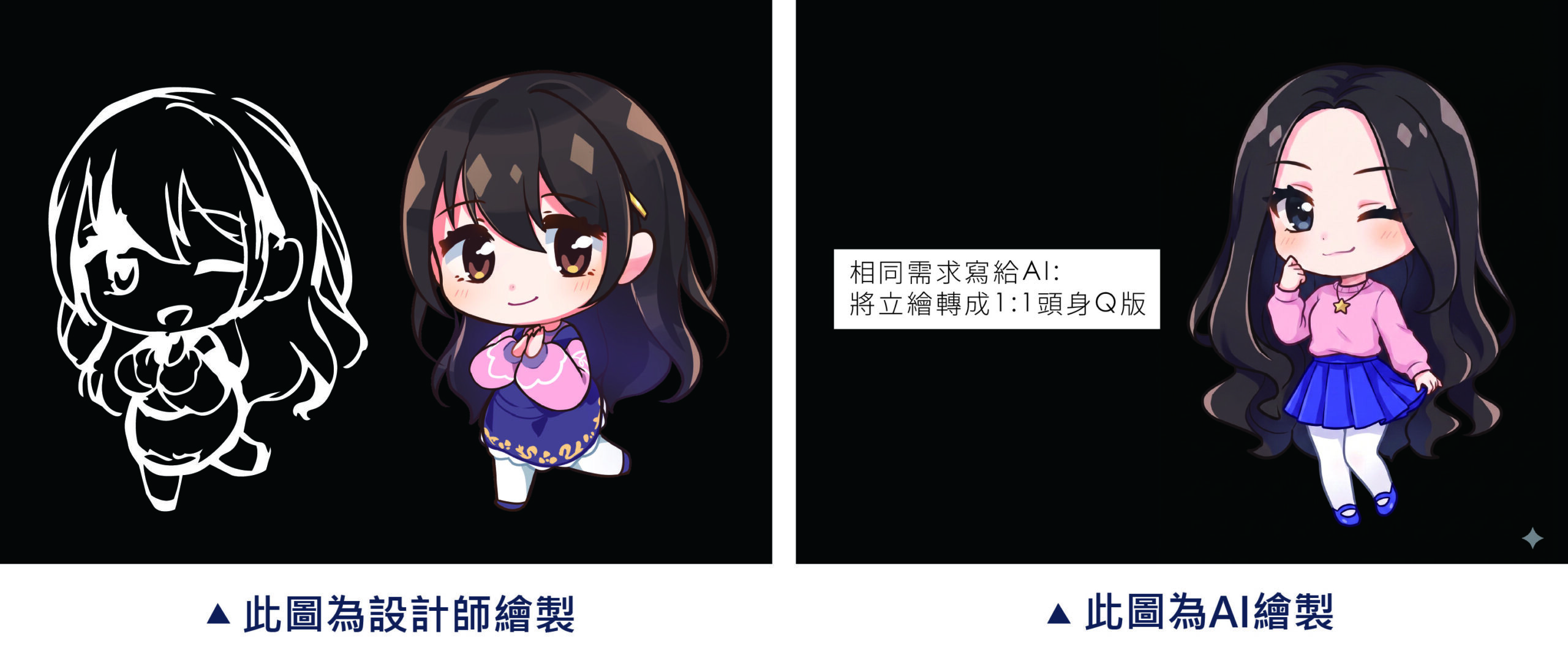
The two images above show the problem from this case. An AI-generated first draft may satisfy you at first glance, but the feeling that "something is off" appears once you actually put the character in the game screen next to other visual elements.
Character proportions, warmth in the eyes, restraint in detail: designers tune these judgments bit by bit based on the character setting and the brand's personality. Adjusting prompts cannot solve this.
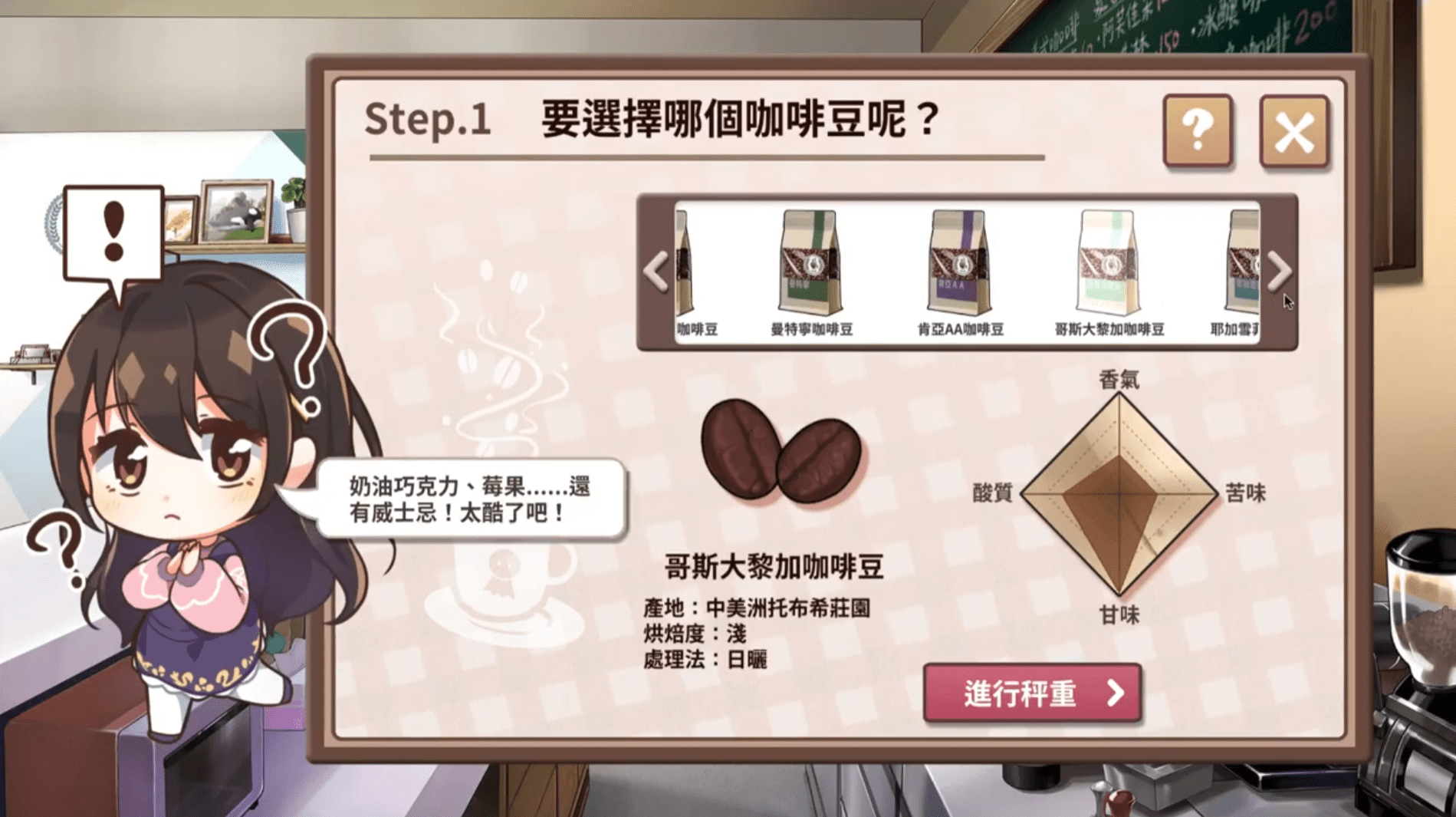
Brand logos and game visuals: AI makes an image, not a brand
Another project was a gamified extension for an island-themed restaurant and bar. It needed a game logo, a product mark and visual planning for the whole corporate identity.
The first logo AI generated looked very designed, with complex lighting and rich decorative detail. It looked great as a screenshot in a slide deck.
But once it was shrunk, it was no longer recognizable. With too much decoration, the memorable point actually became unclear. This is the most common problem when AI does brand design. It is good at generating "nice-looking images," but it cannot judge what truly matters in brand design.
A logo must stay consistent across the website, social media, packaging and UI. It must account for legibility at different sizes, reading rhythm and brand tone. This is a complete system, not a single image.
For the logotype's spacing and structure, a human designer adjusts the weight, corners and geometry to match the brand's personality. AI has small detail errors every time it generates, so it cannot build complete guidelines, let alone extend them consistently across platforms.
In the end, the visual planning for this brand went back to a designer and was rebuilt. AI sped up brainstorming, but a real brand identity system still needs someone overseeing it from start to finish.
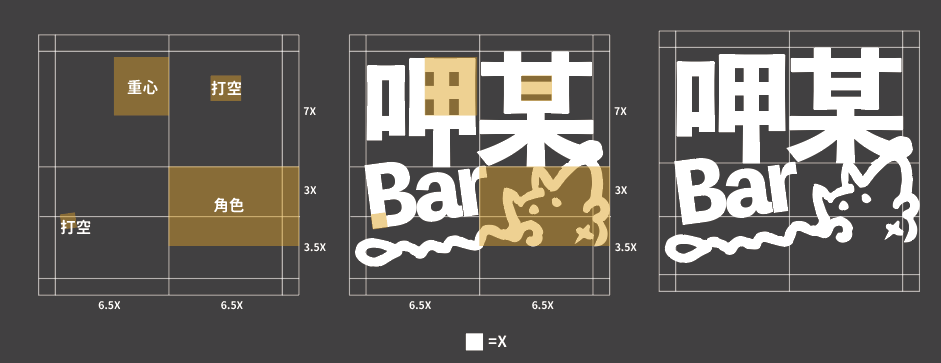
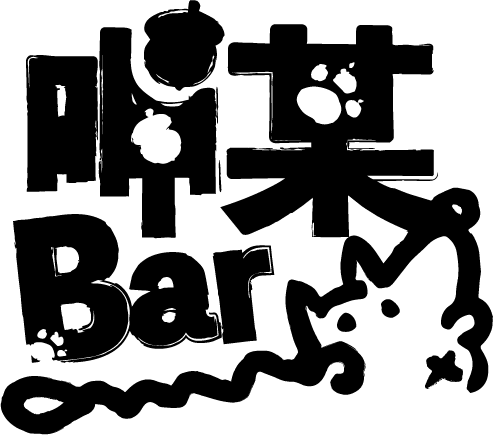
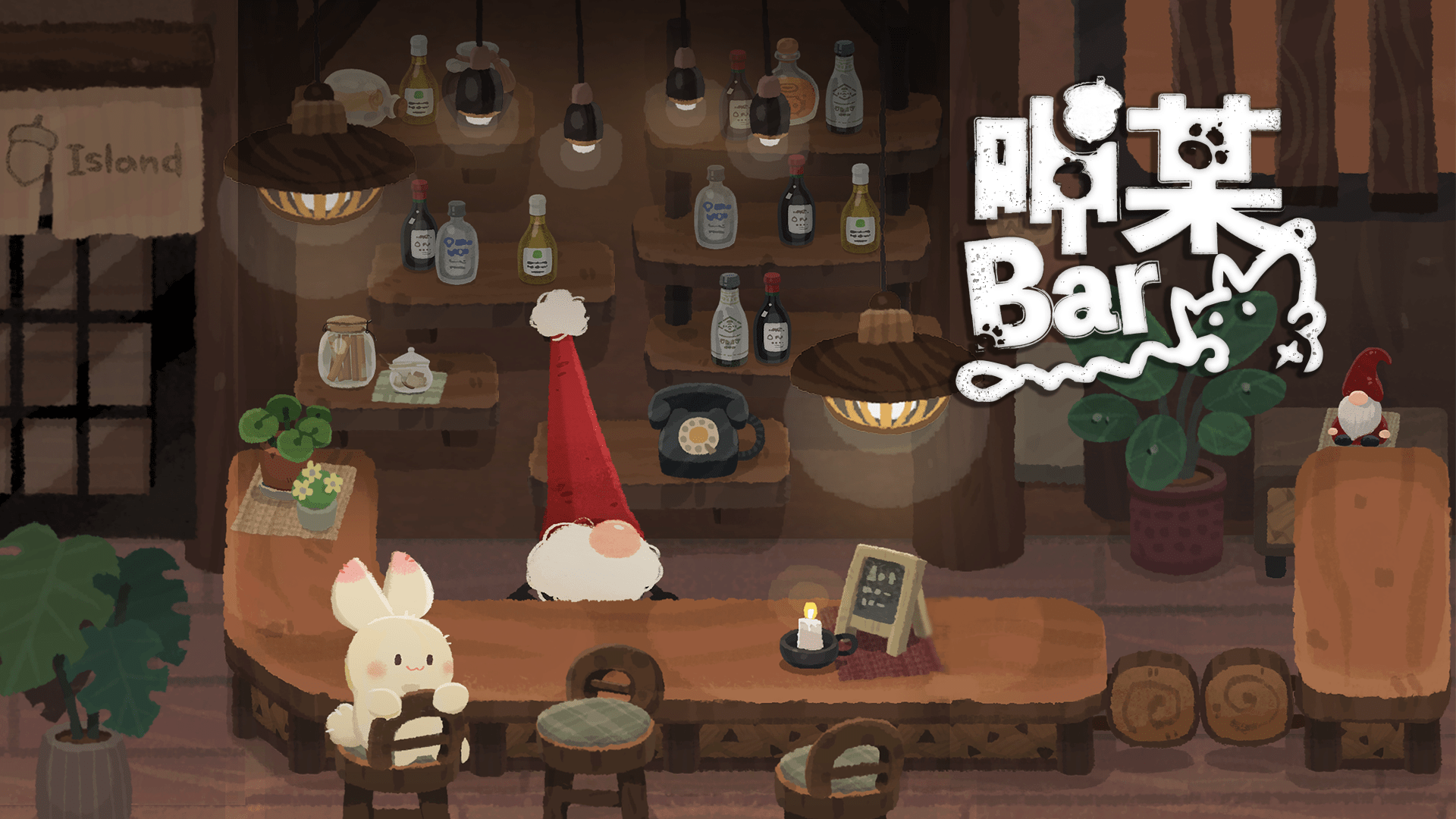
The logo above was made by a designer. Behind it is a complete set of proportion guidelines: where the center of gravity is, where to leave space, where the character sits and how it relates in size to the text. Every decision has a reason. Whether the result is enlarged or shrunk, shown on a website or printed on packaging, it stays consistently recognizable.
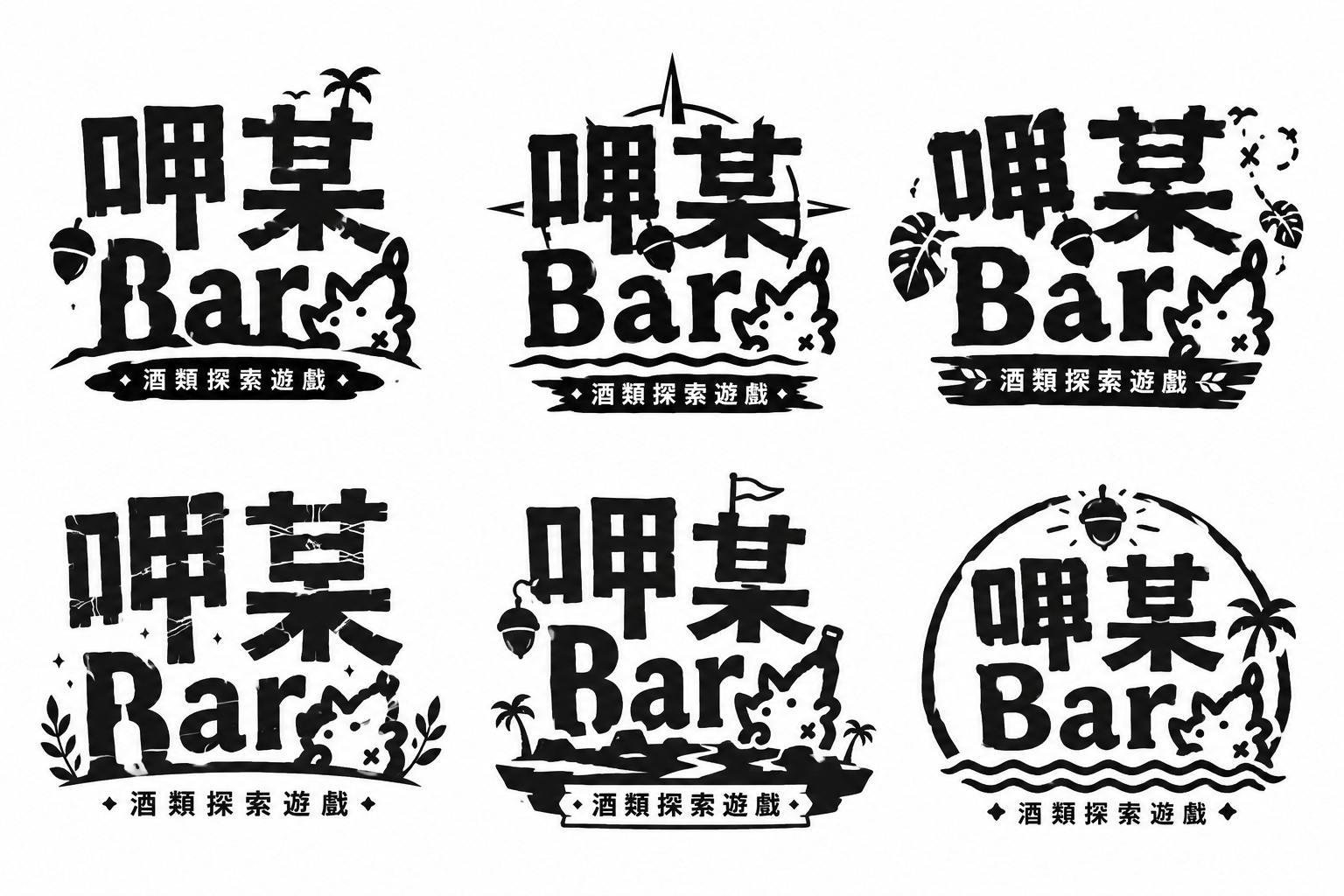
The six versions AI generated offer plenty of choice at first glance: coconut trees, acorns, flags, round frames and all sorts of decorative elements. But look closely and none of the versions has a clear memorable point. The more decoration is piled on, the harder it is to remember what the brand is really about. Shrink it to the size of a social media avatar or app icon and all the decorative details blur, leaving only a vague outline.
The core of brand design is not looking good at first glance. It is being recognized instantly the tenth or hundredth time someone sees it.
This requires a designer to start from the brand's positioning and decide what to keep and what to remove. AI can give you many options, but it cannot make this call for you.
Both cases say the same thing:
AI is very good at quickly generating visual effects, and complex lighting and layered detail at first glance can truly win people over.
But what game art and brand design really need is for things to be remembered over time: players remembering the character and consumers remembering the brand. This does not depend on complexity at first glance. It depends on the designer's judgment and experience with market taste, brand personality and the context of use.
AI can be a helpful tool. For brainstorming, quick mockups and reference for first drafts, it really does save time.
But the final art quality and brand value still need a designer to take part, supervise and sign off.
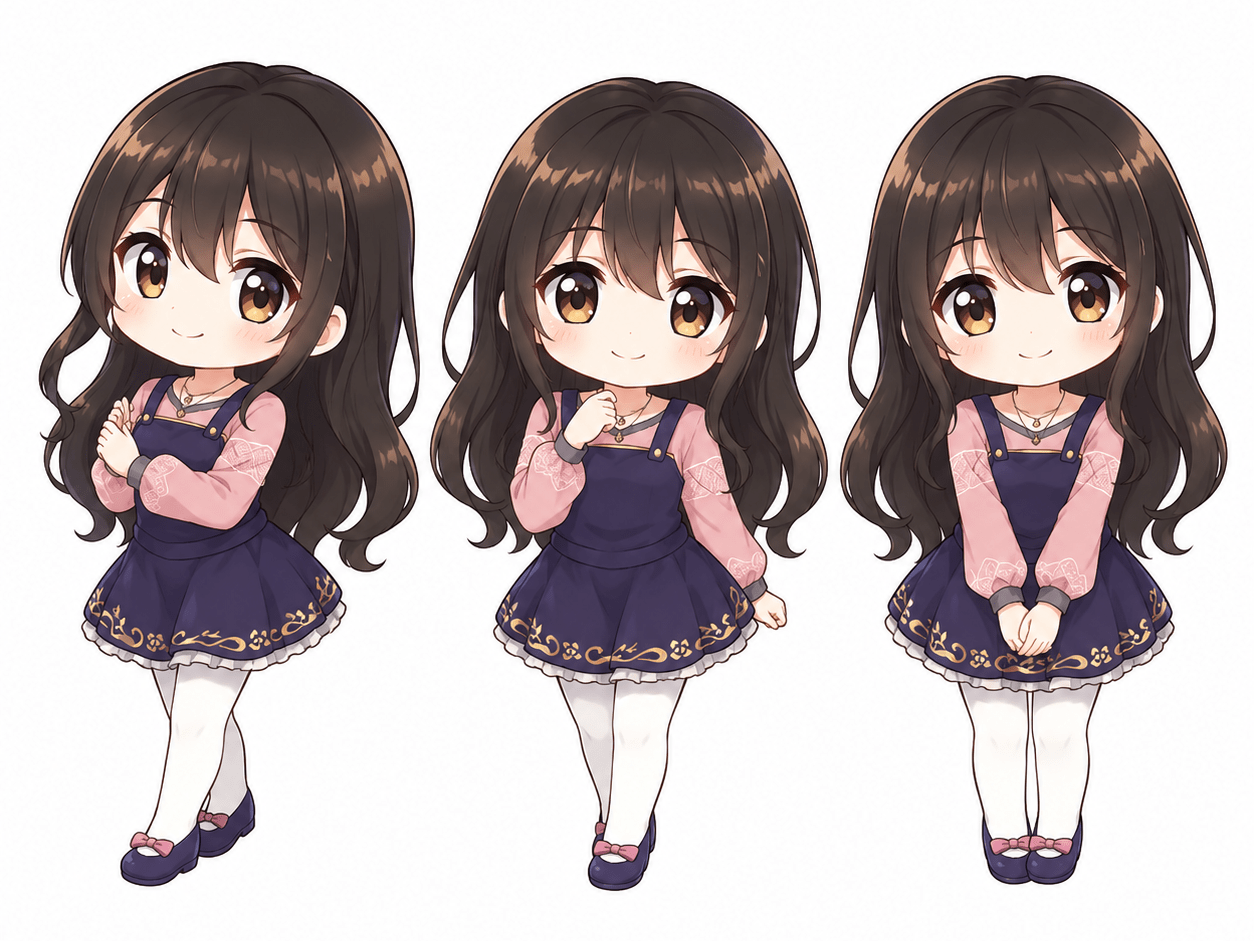
Proportion is the most obvious problem. The head-to-body ratio has lost the sense of weight a chibi character should have. The body is stretched too long and the legs are too straight, so the character looks a bit "stiff" when standing. The cuteness is gone, yet it is not a normal proportion either. It is stuck somewhere in between.
Put the three faces together and the eye spacing and face outline also drift slightly. It is the same character, but the three images show three subtly different versions of "her."
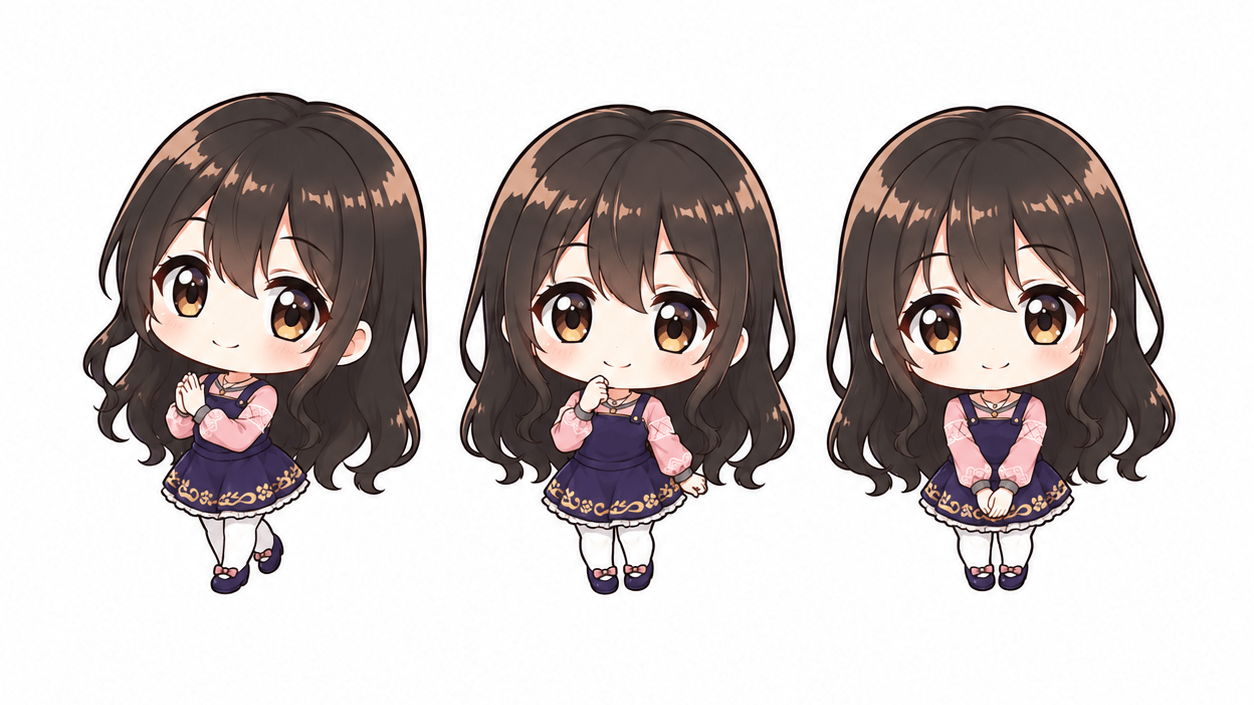
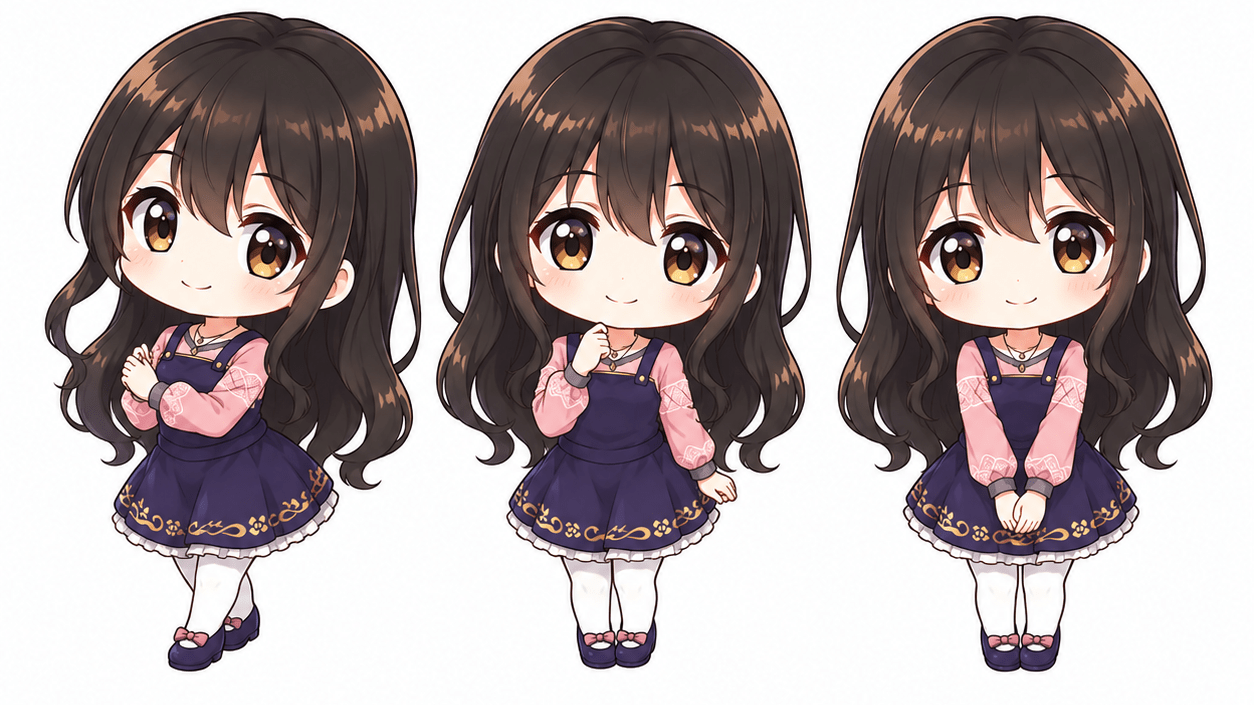
The designer's full-body art in three poses. Put the three side by side and the first impression is "this is the same person." That is not because the outfit is the same but because her presence is consistent.
The warmth in her eyes is there in all three: the amber pupils, the detail at the corners of the eyes, the curve of the lashes all match in every image. The head-to-body ratio is stable, and the roundness of the chibi style does not slip when the pose changes.
The position and flow of the highlights in her hair clearly carry over between the three images. It is not copy and paste. The same guidelines are applied in different poses.
The outfit details are consistent too: the embroidery on the hem, the cuff design and the style of the shoes. Every detail is an extension of the same character.
Xifan in three poses, generated by AI after it was given the designer's original art as a reference.
At first glance it looks close: the outfit colors are right and the general style is there. But look closely and the problems show.
The proportions of the three faces are not fully consistent. The first face is narrow, the second is round and the third is slightly different again. The warmth in the eyes drifts too: the eyes in the first image look lively, while those in the second and third look a little flat. The distribution of hair highlights is not consistent across the three either. Some have more and some have fewer, and they are not kept to the same guidelines.
The embroidery on the hem also differs in detail between the three. It is not the exact same pattern carried across different poses. It changes slightly with every generation.
Overall it looks like "three versions of the same character," not "the same character in three poses." In a game, players may not be able to explain this gap, but they can feel it. Put the two sets side by side, and the clearest difference is not technique but presence.
In the designer's version, the same person lives in all three poses. In the AI version, the three images show three characters who look a lot like her but are not quite her.
Adjusting prompts cannot close this gap, and more reference images cannot catch up either. It comes from something more fundamental. The designer knows who this character is, but AI cannot understand in the overall design that this is the same character. To AI, each one is a new person, a new character and a new style.
Many people leave this out when they evaluate: the time spent going back and forth with AI, constantly adjusting prompts and touching up the results adds up to a cost that is sometimes not much different from hiring a designer directly, or even higher.
After a designer makes the first, second and third versions, they understand the client's overall needs more and more clearly, and the direction gets more accurate. AI starts over with every generation. More rounds of conversation do not mean it understands what you want any better. It is just guessing again each time what the person giving the instructions is thinking.
How do you choose between budget and ideals?
We usually start by laying out the options. If part of the art is AI-generated, the cost really can come down. But before you make this decision, a few things are worth thinking through: visual consistency will be affected, there will be less room to control details, and there may also be trade-offs in long-term brand recognition.
Before we start, we hope both sides have the same expectations about "how far AI art can go."
The gap between AI art and professional artists is not just a matter of style. Players can feel that gap while they play, and brands will see the results over the long run.
FAQ
Q1: Roughly how big is the cost difference between AI art and a professional artist?
The two have completely different cost structures, so it is hard to give a fixed number. The cost of AI generation is the tool subscription plus the time spent tweaking and touching up. Professional artists charge based on style complexity, quantity and the number of revisions. In the short term AI costs less, but if a lot of touch-up or even a redo is needed later, the gap between the two shrinks fast. Many clients underestimate the time it takes to tweak AI before they start.
Q2: Can AI make the first draft and a professional artist then refine it?
Yes, and we do this ourselves. First, confirm that the designer is willing to take over the AI-generated material and that the amount of touch-up work fits the budget. For some styles, refining an AI draft costs as much as starting over. This needs to be made clear before the project starts, or expectations can easily diverge later.
Q3: After the game launches, can players really tell AI art from professional art?
They may not be able to see it, but they can feel it. Players usually don't analyze whether "this image was AI-generated," but they get a hard-to-describe feeling that "something is off." That feeling affects whether they keep playing and whether they share the game.
Q4: My brand already has a visual style. Can AI apply it?
AI can use it as a reference for direction, but it is hard for it to truly apply it. AI cannot deeply understand a brand's visual logic, and it struggles to make detailed judgments that fit the brand's personality. If visual consistency matters to your brand, we still recommend having a professional artist oversee this part.
Q5: Are there copyright issues with using AI-generated game art commercially?
Laws in Taiwan and most countries are still unclear about who owns the copyright of AI-generated content, so there is some legal risk in commercial use. For a commercial game released to the public, we recommend understanding this clearly before use to avoid legal disputes later.