Marketing without community management is wasted effort! Social media strategies every brand should know: wake up your dormant community with LINE mini games in 2026!
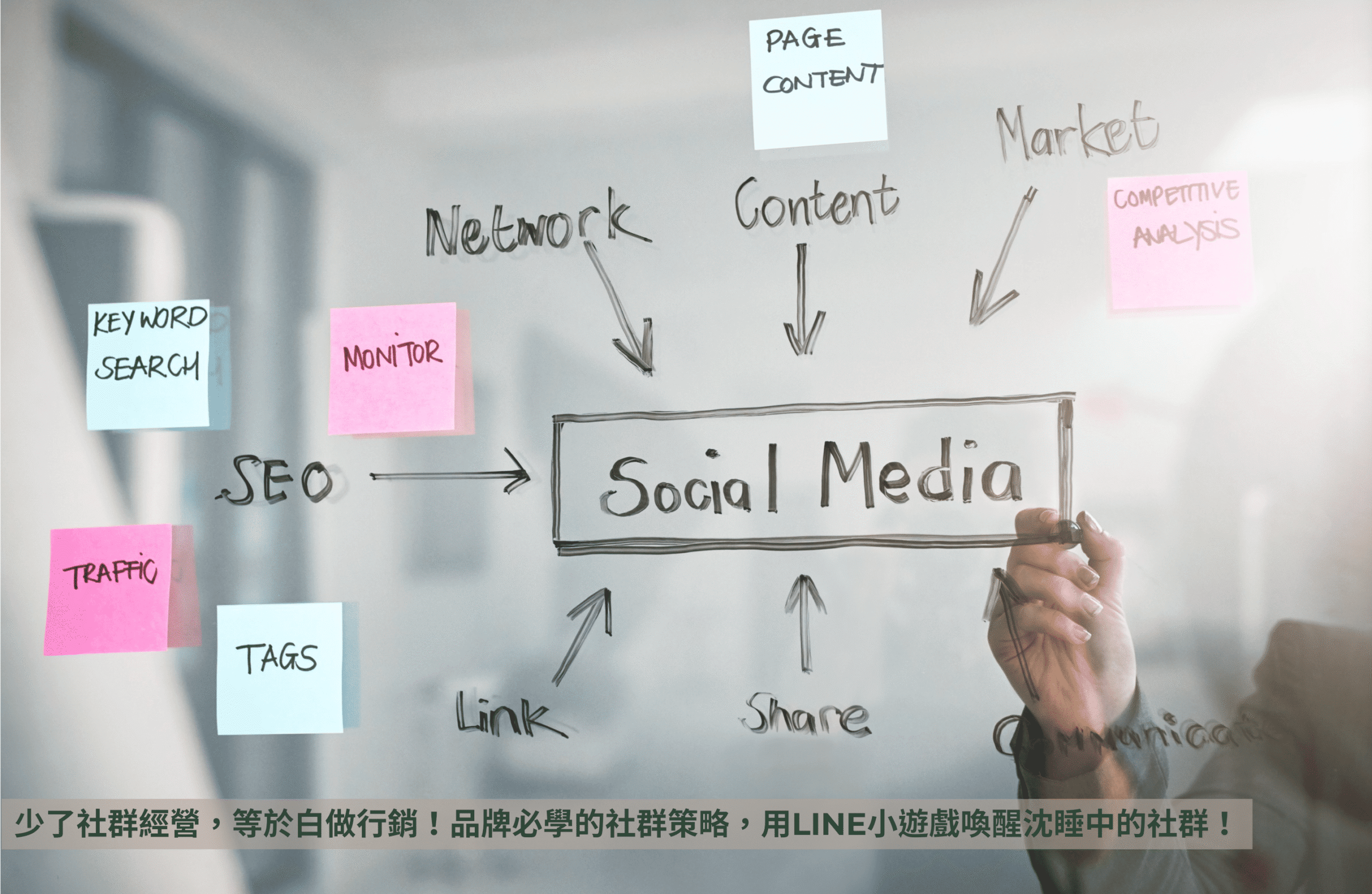
Ads only buy exposure; community management is what grows conversions. The mindset every growing brand needs
In an age when digital marketing is everywhere, getting "exposure" is no longer hard, but getting "conversions" is harder than ever. You may spend budget on ads, events and KOLs, and they do bring traffic in the short term. But where will the next wave come from?
More and more brands are realizing that what delivers long-term results and user trust is not one-off bursts of exposure, but steady, patient community management.
Marketing used to be one-way: "I talk, you listen" was enough to close a sale.
Today, consumers care more about: "Do you understand me? Are you sincere? Can I trust you?"
That is why brands need more than exposure. They need to be liked, engaged with and recommended.
The golden triangle of brand building: community ties everything together
In digital marketing, a brand that wants real long-term competitiveness cannot rely only on ad exposure or short-term tactics. It needs a stable, sustainable community management strategy. At its core are three dimensions: awareness, value and conversion, and every one of them depends closely on "community".
📢 1. Brand awareness: spread by fans on their own, not pushed one way by the brand.
In an age of information overload, most consumers are tired of "ad messages" and may even be on guard against them.
Many people react to the word "ad" with doubt and distrust, assuming it is just what a brand "says to sell".
So no matter how much a brand spends on exposure, without real interaction and a foundation of trust, those ads may simply be scrolled past or even blocked.
That is why "community management" plays an increasingly important role in marketing strategy: voices from the community are more trusted and more likely to be passed on.
In particular, a MGM (Member Get Member) referral mechanism can greatly amplify a community's natural reach. A recommendation from someone you know is not just information; it is trust.
That is why, in the digital age, brand awareness should not depend on ads pushing messages, but on people in the community interacting and sharing on their own.
💡 2. Brand value: build brand identity through a consistent style and steady content.
A brand is not just a logo, a color palette or a slogan. It is the overall impression built up by "what" you keep saying in your community, "how" you say it and "who" you say it to.
The brands that truly move consumers and stay in their minds are those with a consistent style and steady tone, instantly recognizable and always offering value.
That is why a community strategy cannot be random posting; it has to come back to communicating the "brand core". Nail your brand's personality and let every piece of content carry it forward. Are you expert and knowledge-driven, or down-to-earth and everyday? Your brand's tone directly shapes how users see you and how attached they become.
With good community management, users know at a glance: "This post is from that brand." Word choice, response style and visual elements make the whole community feel unified, professional and warm. Plan a variety of content types to raise user value and trust. Long-term, steady output builds not only "presence" but also "trust".
Let all of this become brand loyalty. When a community engages users over time with a consistent style and value proposition, the brand creates an "emotional connection" and a "sense of identity" in users' minds. Your community speaks your brand value for you. Only by keeping the community going and talking with users can a brand truly reach people's hearts and last.
💰 3. Brand conversion: not a hard sell, but the result of trust built over time
Among all marketing tactics, the strongest driver of conversion is neither eye-catching ad copy nor limited-time promotions. It is the long-term trust built up between a brand and its users.
A truly effective community management strategy delivers more than surface-level metrics like likes and comments. It guides users from "followers" to "buyers" and even to "brand advocates".
Compared with ads, conversions that come from a community are much stickier, because:
-
Users already follow you, so converting feels natural rather than forced
-
After buying, they are more likely to stay and become long-term customers
-
They are willing to share and review on their own, creating word of mouth
This means community management effectively covers the nurturing and conversion work at the bottom of the marketing funnel, turning one-off marketing exposure into an "ongoing value relationship".
✅ Simply put, ads make people "see you", while community makes people "trust you" and "choose you".
Brands should not chase short-term click-through rates and sales figures alone. Through strategic, warm community management, they can build a complete path from attention to interaction to conversion, and create a virtuous cycle where "content marketing builds trust, and trust drives purchases".
Different platforms, different playbooks: how the major social platforms compare

Each platform has its own audience and engagement culture. When planning social content, understanding each platform's habits and preferences, and the hidden challenges behind them, is key to an effective social strategy.
Facebook | A content bridge for older users, where trust and emotional connection still matter
Facebook's main users are aged 30 to 55. Facebook is now facing the loss of younger users and algorithms that limit reach. Even pages that have been run for years struggle to reach their existing fans organically. We suggest brands use "live streaming" to strengthen real-time interaction and trust, giving fans a friendlier, more person-to-person connection. In addition, older users are more interested in practical, in-depth content, so regularly publishing expert articles, such as health information, personal finance, everyday knowledge or your brand philosophy, also helps build a professional image and authority.

Instagram | A visual, style-driven space where polish is the competitive edge
Instagram's users are mostly aged 18 to 35. They prefer high-quality images, visually consistent feeds and the fast-paced entertainment of short videos (Reels). It is a space that values aesthetics and atmosphere, and it particularly suits fashion, beauty, food and drink, and travel brands.
But Instagram is also under pressure to change. Its photo-and-caption culture is gradually giving way to short video, and regular posts no longer reach as many people as before. The platform's algorithm is also opaque, making exposure unstable, so brands have to plan content for both "aesthetics" and "what the algorithm favors". To stand out on Instagram, you need not only strong visual storytelling but also a sense of how to create short videos (Reels) with a rhythm that resonates.

YouTube | The hub for in-depth content and a powerful tool for building a professional brand image
YouTube is the world's largest video platform. Its users span a wide age range, concentrated between 18 and 45. Compared with short-video platforms, YouTube users tend to watch for longer, which suits long-form marketing such as tutorials, knowledge sharing, product unboxings and brand documentaries. By consistently producing in-depth videos, brands can build a "professional and credible" image and long-tail traffic.
However, YouTube content has a relatively high production barrier. Planning, filming and editing all take time and resources. Competition is fierce, and without a good content rhythm and title optimization, videos easily get lost in the flood. The algorithm also favors content with high engagement and retention, so brands need not only to "tell stories" but also to know "how to tell them in an engaging way".

TikTok | A fast-paced creative stage where trends and traffic change in an instant
TikTok is today's hottest short-video platform. Its main users are the younger generation aged 13 to 30, and it is all about creativity, entertainment and what is trending right now. Users are used to swiping through quickly and readily embrace fun, fast-paced videos. Brands that cleverly combine popular music, trending challenges or short skits can build huge exposure in a short time.
However, TikTok's extremely fast pace also brings challenges. Trends fade in an instant, so brands need to be highly agile and able to create content in real time. On top of that, young users are sensitive to sponsored content. If the commercial angle is not natural enough, they will skip it or even push back. Brands need to find a balance between content and marketing, turning ad messages into fun experiences, or they will be left behind.

LINE Official Account | The communication hub for brand CRM and the key path from message to conversion
LINE Official Account has extremely high user penetration in Taiwan. Its core users are office workers and families aged 25 to 50, making it a key platform for companies to build member relationships and drive conversions. Users are used to receiving coupons, notifications and customer service messages. Designed well, LINE can become a brand's direct line for "one-to-one communication".
However, the challenges of running LINE are just as clear. Users have little tolerance for heavy broadcast messaging, and if content is too frequent or boring, they will block you quickly. Users also expect "interactive" content such as prize draws, games and segmented quizzes. If a brand only sends announcements, it will be hard to build engagement. We recommend combining LINE VOOM, interactive games and precise tag-based segmentation to deepen user engagement and improve remarketing results.

Community building too slow? Use games to close the gap between brand and consumer and boost engagement
Do you remember the post you scrolled past five minutes ago?
That Reel you just watched made you laugh, sure, but do you remember what it was about?
Or are you like us: laughing for three minutes on TikTok, then turning away and forgetting what was so funny? Yes, that is everyday social media now. Too much information, updates too fast and content too short. Every day feels like watching scenery from a highway: blink and it's gone.
We scroll past hundreds or thousands of social posts every day, yet very few leave a real impression. Today's consumers are used to scrolling fast and forgetting fast, and content they don't see repeatedly or truly engage with rarely leaves a trace.
That is exactly why community management is a long game: only through ongoing conversation and steady accumulation can a brand gradually earn trust and recognition.
But recently, more and more brands have found a faster way to be remembered: interactive game marketing. (See examples across industries: Learn more)
Instead of pushing promotional messages again and again, design a simple, fun and engaging mini game that takes consumers from "seeing" to "taking part". It is not only fun to play; it also makes your brand felt and memorable, and more likely to be shared, spreading goodwill for your brand.
From content that leaves people cold to participation they feel
From brief exposure to meaningful interaction
From a message scrolled past to the start of clicks, shares and action
What your competitors are already doing: LINE mini game marketing
That's right. More and more brands are adopting LINE mini games as a secret weapon for community management. From household goods, food and beverages and financial services to lifestyle brands, everyone has discovered the same thing: instead of spending money on cold exposure, design a fun interaction that gets consumers playing, remembering you and even sharing it on their own, achieving the benefits of MGM.
LINE has the widest range of user ages in Taiwan and an extremely high open rate. Interactive games not only create buzz but also bring you closer to users and strengthen brand goodwill. When the experience is fun, conversion is no longer pressure; it happens naturally.
Many brands have already added prize draws, coupons and MGM referrals to their games. This not only boosts engagement but also connects to their LINE Official Account, website or stores, creating an integrated marketing flow that truly goes from "play" to "purchase".
Not just for big brands: 3 simple scenarios to get started with LINE game marketing
- Member sign-up and attracting new friends: pair a game with a prize draw to turn passers-by into fans and fans into members!
Just started your LINE Official Account and don't have many followers yet? Try using a game to attract new friends. Simple, fun interactive games like spin-the-wheel draws and scratch cards, combined with a "join as a member for a chance to win a big prize" mechanism, not only encourage participation but also let you collect customer data along the way and quickly drive member sign-ups.
📌 Best for: brands with a new LINE account or that want to strengthen their membership system.
2. Promotions that drive purchases: don't just hand out discount codes; let consumers "play" for their deals!
Tie in with holidays and seasonal promotions by designing a dedicated mini game, such as "beat the clock for a discount" or "answer correctly to win a coupon". This makes the campaign more fun and raises the perceived value of the offer. When consumers earn an exclusive deal through a game, they are more likely to feel "I'll miss out if I don't buy", which speeds up conversion.
📌 Best for: promotion periods and brands that want to raise conversion rates
3. Added value for brand content and segmented engagement: educational and charitable content can be games too, improving knowledge retention and brand recall!
If your brand is knowledge- or service-based, such as finance, health care, insurance or law, you can use "knowledge quiz games" or "level-based challenges" to help users understand expert content through interaction while building trust in your brand. With audience segmentation, you can also push relevant topics to different groups for more precise engagement.
Related reading:
- Take a quick look at common LINE games and see how these brands play! » LINE interactive games: 2025 game experiences, a high-engagement marketing strategy to raise user participation and conversion rates!
- Beyond LINE mini games, there are many larger interactive game experiences. Quickly see whether your industry is a good fit » Let your brand come to life through play! Online interactive game design for high-impact exposure: quiz challenges and tap games, the new online trend for 2025!
📩 Build a LINE interactive game for your brand and turn "strangers who scroll past" into "loyal fans who take action"!
No amount of advertising beats one fun interaction. Ads buy exposure; games grow conversions.
Your brand deserves an interactive experience that people "play and want to share".
Launch a LINE interactive game with ease, gain fans fast and convert naturally! Let us build a mini game made for your brand and lift your engagement and conversion rates. Tell us what you need today!
Get a free consultation now