Why did Micron turn its employee handbook into a quiz game? A gamified Employee Day training case study
GameNobility | Gamifying employee training
Why did Micron turn its employee handbook into a quiz game?
An Employee Day event that got employees to remember the rules on their own
The employee handbook matters, but few people read it all the way through. This project set out to close that gap: the content has to be remembered, but traditional awareness campaigns struggle to get people engaged.
This is a corporate training gamification case study: GameNobility helped Micron turn its employee handbook into a live quiz at its Employee Day event. Through question design, real-time competition and hidden achievements, the rules went from something employees are told to something they take part in.
Key points in 30 seconds
- Micron chose to use a game to change how it communicates the employee handbook: turning a thick rulebook into a live quiz that employees join at the Employee Day event by scanning a code with their phones.
- GameNobility built a lightweight H5 quiz system: employees don't need to download anything and can pick a character and nickname, while the host can set the question bank, modes and answer time, with a leaderboard and achievement titles.
- At a large company's on-site event, the network environment, server stability and a run-through rehearsal matter more than the visuals. The game has to work perfectly the first time, in front of senior managers and every colleague.
The employee handbook matters, but few people read it all the way through
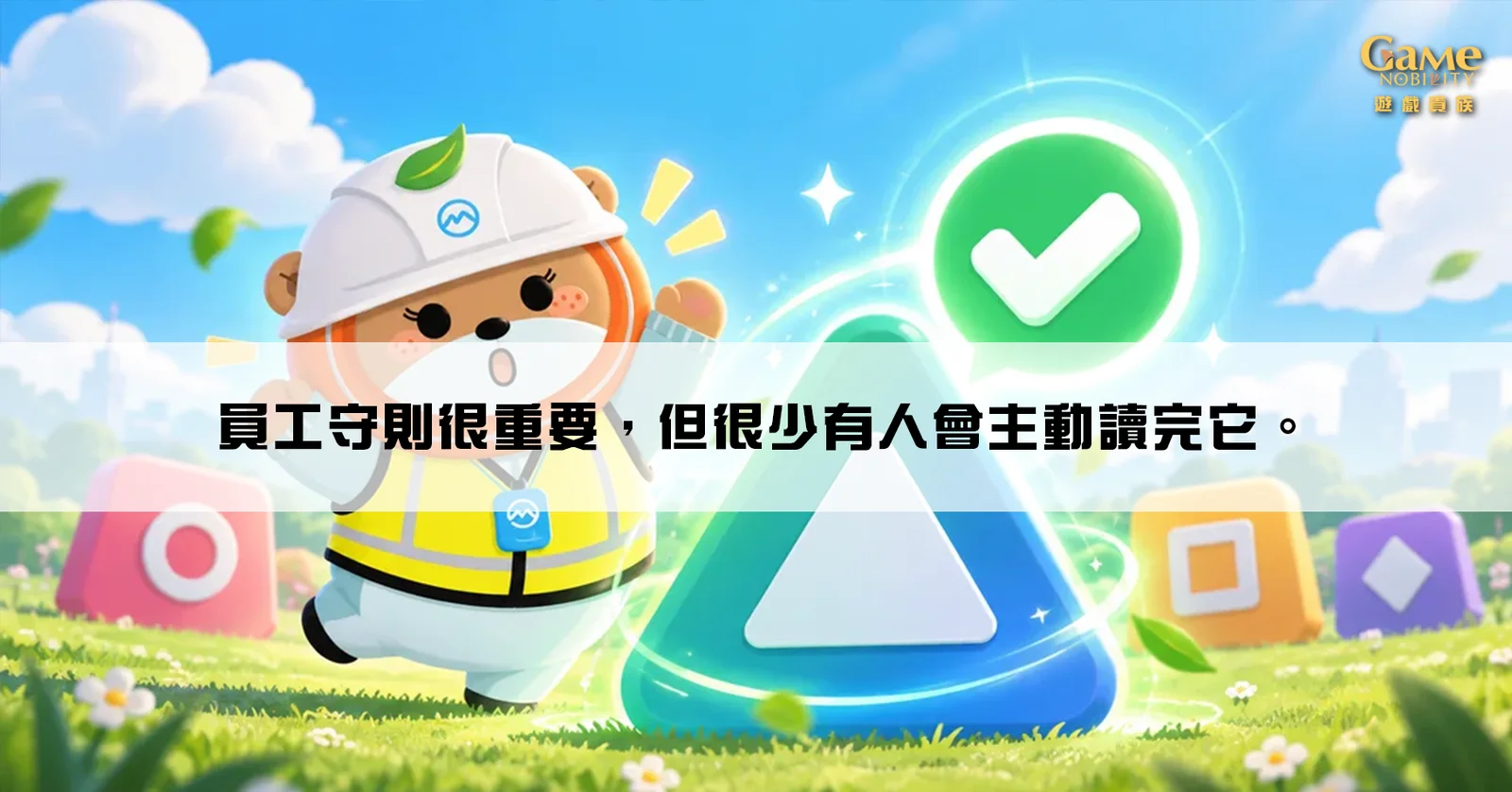
Every company has an employee handbook. It is usually thick, thorough and important: information security, work rules, site safety, codes of integrity. Every rule exists for a reason.
The problem is that important doesn't mean memorable. Most people sign to confirm they have read it when they join, and rarely open it again. When a rule actually matters, employees may not remember it, or understand how it relates to their daily work.
Micron faced this gap head-on. Rather than sending the document again or running another online course, they wanted a way to get employees to take part and want to remember. So in planning its Employee Day, Micron took a bold and smart approach: turning the employee handbook into a quiz game everyone plays together.
This is a corporate training gamification case study: GameNobility teamed up with Micron's marketing agency to build a phone-based quiz system for Employee Day. With a customizable question bank, real-time competition, characters, a leaderboard and achievement titles, the rules went from something employees are told to something they take part in.
Why a quiz instead of an online course?
Employee Day is an occasion when everyone is in the room. Answering at the same time and seeing the rankings live creates far more energy than everyone opening an online course on their own.
A quiz also has a very practical benefit: the answer is revealed right after each question. The moment employees get a question wrong is when they are most likely to remember the correct rule.
"What you learn from one wrong answer often sticks better than ten pages of reading."
How does an Employee Day quiz work?
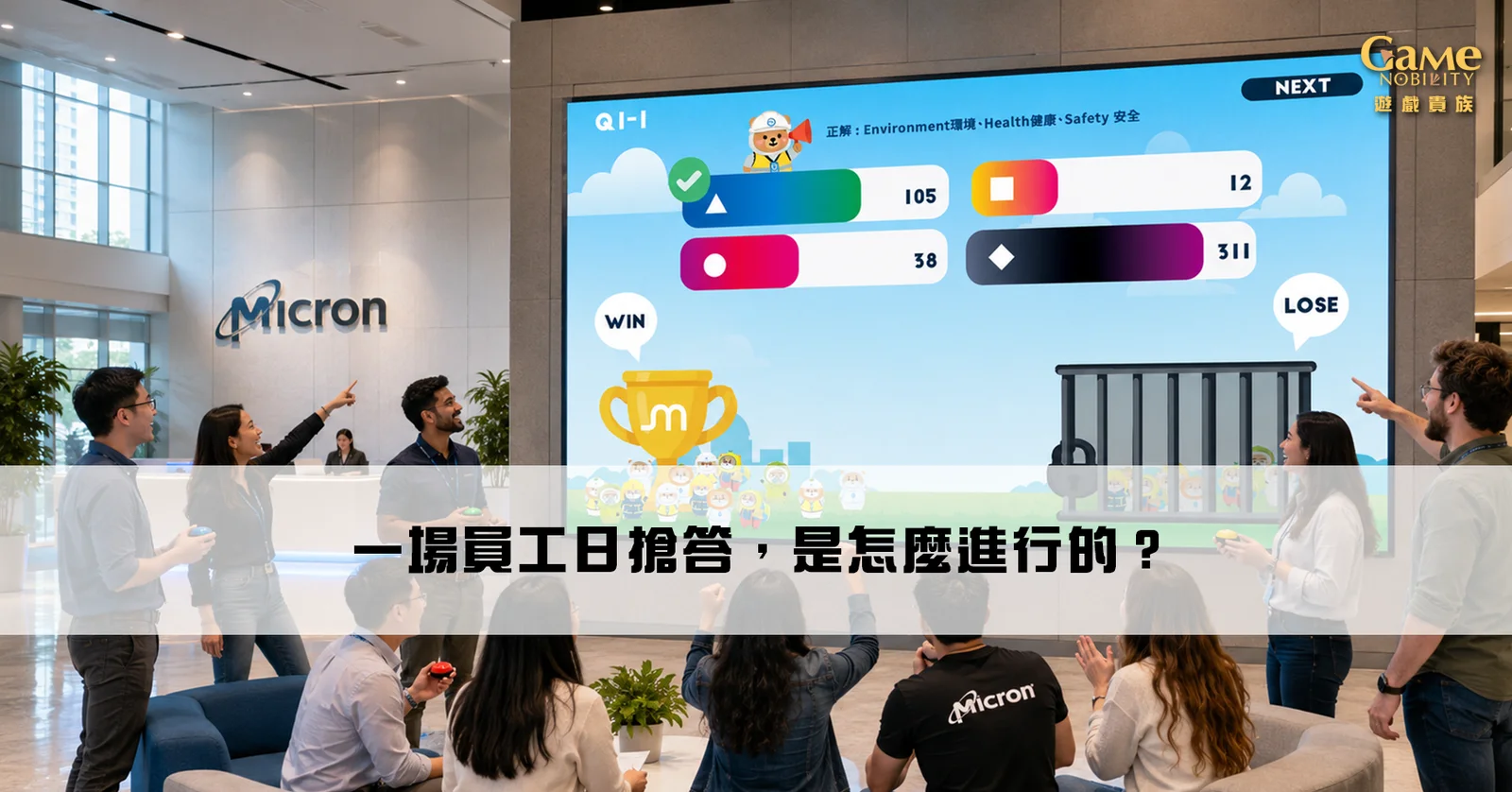
For this project we designed a real-time quiz system with the host on a big screen and everyone answering on their own phones. The whole flow is deliberately designed to feel like a party, not an exam.
1. Scan to join, no app download needed
When the host opens a room, a QR code appears on the big screen. Employees scan it with their own phones and join directly in the browser. Both Android and iOS work, and the big screen shows in real time how many people have joined.
2. Enter a nickname and pick a character
Participants choose one of GameNobility's animal characters as their avatar: a rabbit, kangaroo, dog or bee, each wearing a hard hat and work clothes. A small choice like this gives everyone a sense of involvement before the game even starts.
3. Questions on the big screen, answers in your hand
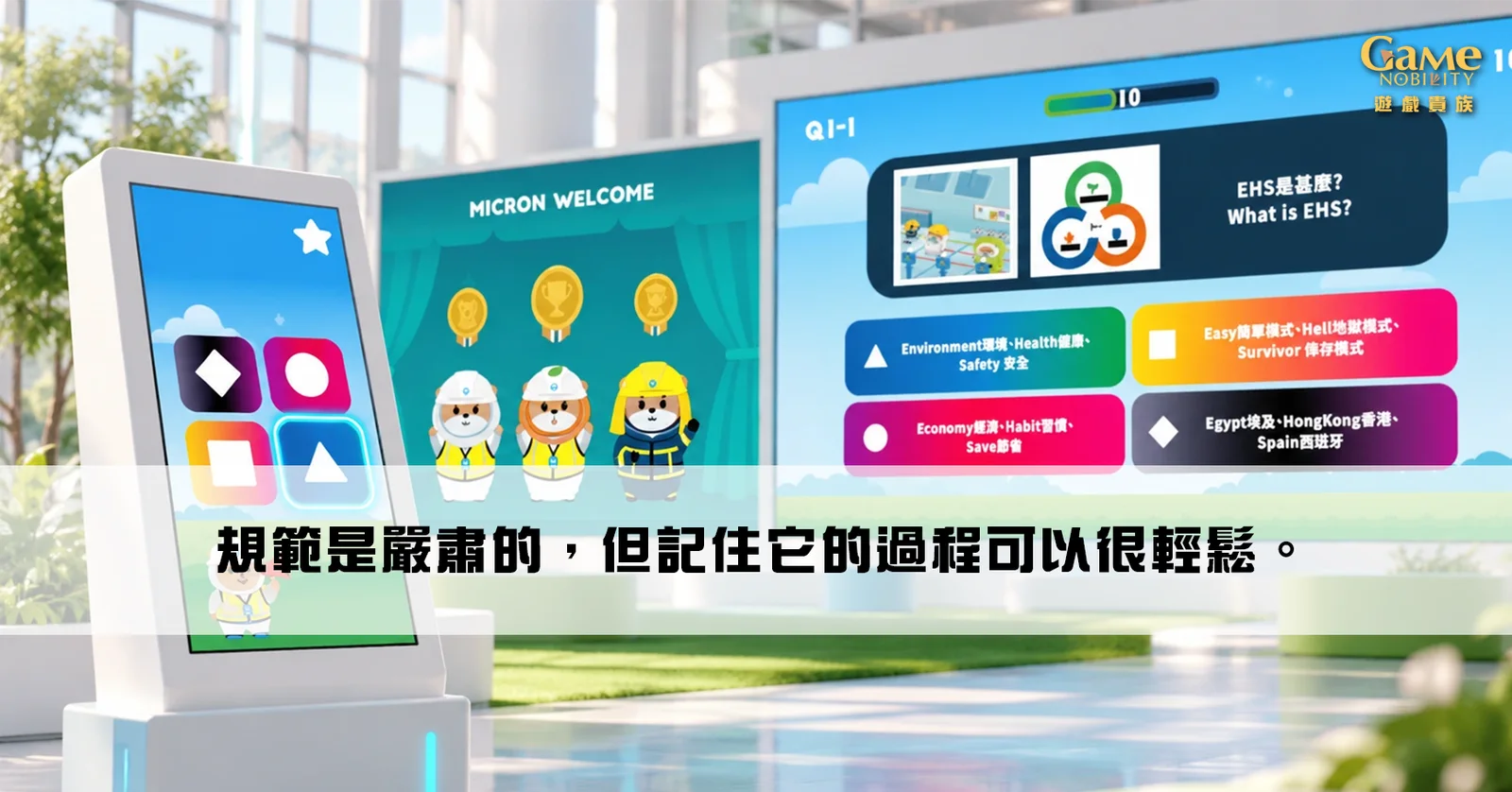
The question and countdown appear on the big screen, while the phone shows only four buttons with bold colors and shapes. Everyone looks up to read and down to answer, so the room's attention naturally gathers in one place.
4. Answers revealed right away, with explanations
After each question, the big screen shows how answers were spread across the options, the correct answer and an illustrated explanation. Each phone instantly shows whether you were right or wrong and how many points you scored.
5. Faster and more accurate means more points
Answering quickly and correctly earns more points, and three correct answers in a row trigger an extra streak bonus. Speed and streaks keep every question suspenseful and give players who fall behind a chance to catch up at any time.
6. Leaderboard, podium and achievement titles
After each round there is a cumulative leaderboard, and a podium reveals the top three at the end. Beyond rankings, the system awards titles based on how people answered, such as "Steady Player" for consistent performance and "Quick Thinker" for a last-minute comeback. Even if you don't finish first, you still get your moment to shine.
"Rules are serious, but remembering them can be easy."
A system the host can run on their own
Corporate training has a very practical need: events don't happen just once, and content changes as regulations and company policies are updated. So from the start, we designed the content and the game separately.
Through the host admin panel, the client or event host can set:
- Question bank: which questions to include and how many topics to split them into, chosen and swapped to fit the focus of each event.
- Mode and number of questions: adjust the number of questions per round and how it runs, based on the event length and the pace in the room.
- Answer time: a fast pace for easy questions, and a few extra seconds for scenario questions that need thought.
- Event rooms: each event opens its own room, with separate dedicated URLs and QR codes for the host and players.
This means the same system can run an Employee Day handbook quiz this year and switch to information security awareness, onboarding or workplace safety procedures next year, without being developed from scratch each time. For a company, it is a training tool you invest in once and use many times.
Technically, the whole system is a lightweight H5 web app. It needs no installation, loads quickly and runs smoothly on phones of different brands and ages, keeping the load to a minimum when many employees connect at the same time.
Working with a large company, the real challenge isn't the visuals
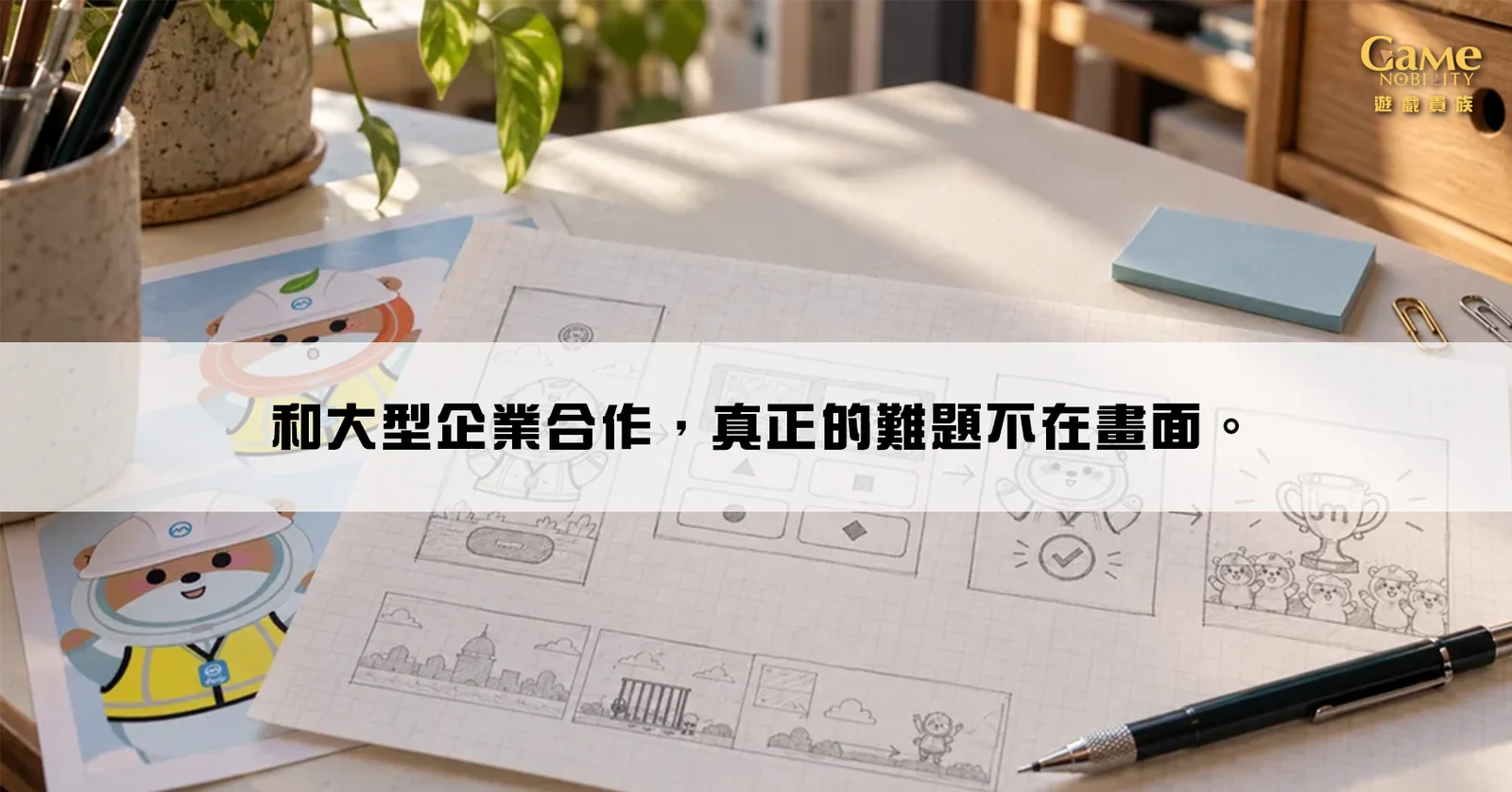
This project was carried out through Micron's marketing agency, with GameNobility responsible for designing and developing the game system. For a development team, a large company's on-site event has one defining trait: there is only one chance.
With every colleague and senior manager in the room, a ten-second freeze, someone failing to join the room or scores not syncing would affect the whole event. So in this project, the work that mattered more than the visuals came down to these three things:
- Network environment
Corporate networks usually have strict information security rules, and the venue's Wi-Fi and mobile network may not be stable. We checked the venue's network conditions and connection restrictions in advance to make sure employees' phones could get into the game smoothly. - Server setup and stability testing
A real-time quiz needs everyone's answers to be received, scored and synced to the big screen within the same second. We set up a dedicated server environment and tested with many Android and iOS phones connected at once, confirming that scores and rankings stay accurate and real-time when large numbers of participants answer at the same moment. - A full run-through on site
We went to the venue ourselves and walked through the whole game flow once, from opening the room, scanning to join and choosing characters to answering, explanations and the awards. We checked that the big screen, sound, the host's pacing and every transition ran smoothly, so the game segment would go right the first time when managers and colleagues arrived.
"A live event has no second take, so we prepare for the rehearsal as if it were the real launch."
This matches what we learned on the Dcard project: when working with a large company, being able to fit into its existing processes, IT policies and event rhythm matters as much as technical skill.
What did this project prove?
Micron's willingness to use a game to communicate its employee handbook is an important signal in itself: employee training doesn't have to be one-way. It can be an event everyone takes part in.
Once the rules became a quiz, clauses that sat quietly in a document turned into scenario questions that need a judgment within seconds. Employees focus on the questions for points and rankings, learn the right way the moment they answer wrong, and after the event discuss with each other which option they picked. Competition brings focus, rewards bring motivation, and instant feedback means knowledge is understood, not just read.
For manufacturing, this carries an extra meaning. Safety and information security rules are not just for memorizing. They have to come to mind and be followed correctly at the moment they are needed. Only when employees truly understand the reasons behind the rules are those rules more likely to be put into practice on the job.
Every company has a thick employee handbook.
This approach applies directly to information security rules, workplace safety procedures, onboarding, compliance awareness and company culture.
Change the content, and the game still works.
Is your training content right for gamification? Ask three questions first
- Do employees need to remember this content, not just read it?
- Is there an occasion where everyone can take part at the same time, such as Employee Day, onboarding, a department meeting or a year-end party?
- Can the content be rewritten as scenario or multiple-choice questions?
If all three answers are yes, your training is a great fit for a quiz game.
Want to turn internal training into an event employees want to join?
Tell us your training topic, number of participants and planned event date, and we will suggest the right format for your scope. We can discuss anything from a quiz system with a customizable question bank to scenario challenges and multiplayer co-op levels.
- Fill in the commission form: https://www.gamenobility.com/commission-request-contact-form/
- See training gamification case studies and how we quote: https://www.gamenobility.com/#need-learning
Further reading
FAQ
Q1: Is corporate training really a good fit for gamification?
It suits content that needs to be remembered and can be turned into situational judgments, such as rules, processes and safety guidelines. The point is not to make the course fun. It is to let employees make judgments while taking part and get feedback right away.
Q2: Do employees need to download an app?
No. Employees scan the QR code on the big screen with their own phones and join the game directly in the browser. Both Android and iOS users can take part.
Q3: Can we edit the question bank ourselves and reuse it?
Yes. The question bank is designed separately from the game system, and the host can set questions, modes and answer time in the admin panel. For later events, you only need to swap the questions to keep using the same system.
Q4: Will the game lag when many people connect at once?
The system is a lightweight H5 web app running on a dedicated server environment. Before the event, we test with many different phones connected at the same time, and we also recommend a full on-site rehearsal to confirm the network and flow run smoothly.
Q5: How do you handle corporate information security requirements?
Before the project starts, we confirm the venue's network conditions, the company's internal IT policies and whether any data needs to be kept, and then decide on the server and deployment approach.
Q6: Besides the employee handbook, what other content works this way?
Onboarding, information security awareness, workplace safety procedures, compliance rules, company culture and brand knowledge can all be designed as quizzes, challenge levels or scenario simulations to suit the occasion.
Q7: Can we use it without a dedicated event host?
Yes. Hosting mostly means opening a room, starting the game and moving to the next question, so the flow is simple. We can also walk you through the controls before the event, or provide on-site support if needed.