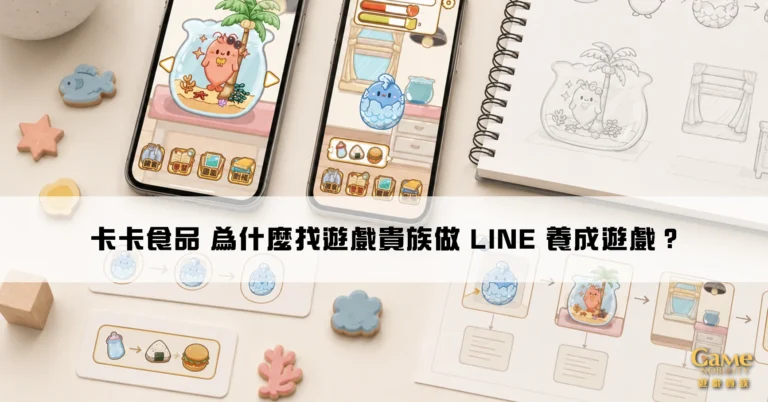
A mini game in your LINE OA can make it worth more: from "read" to "coming back on their own"
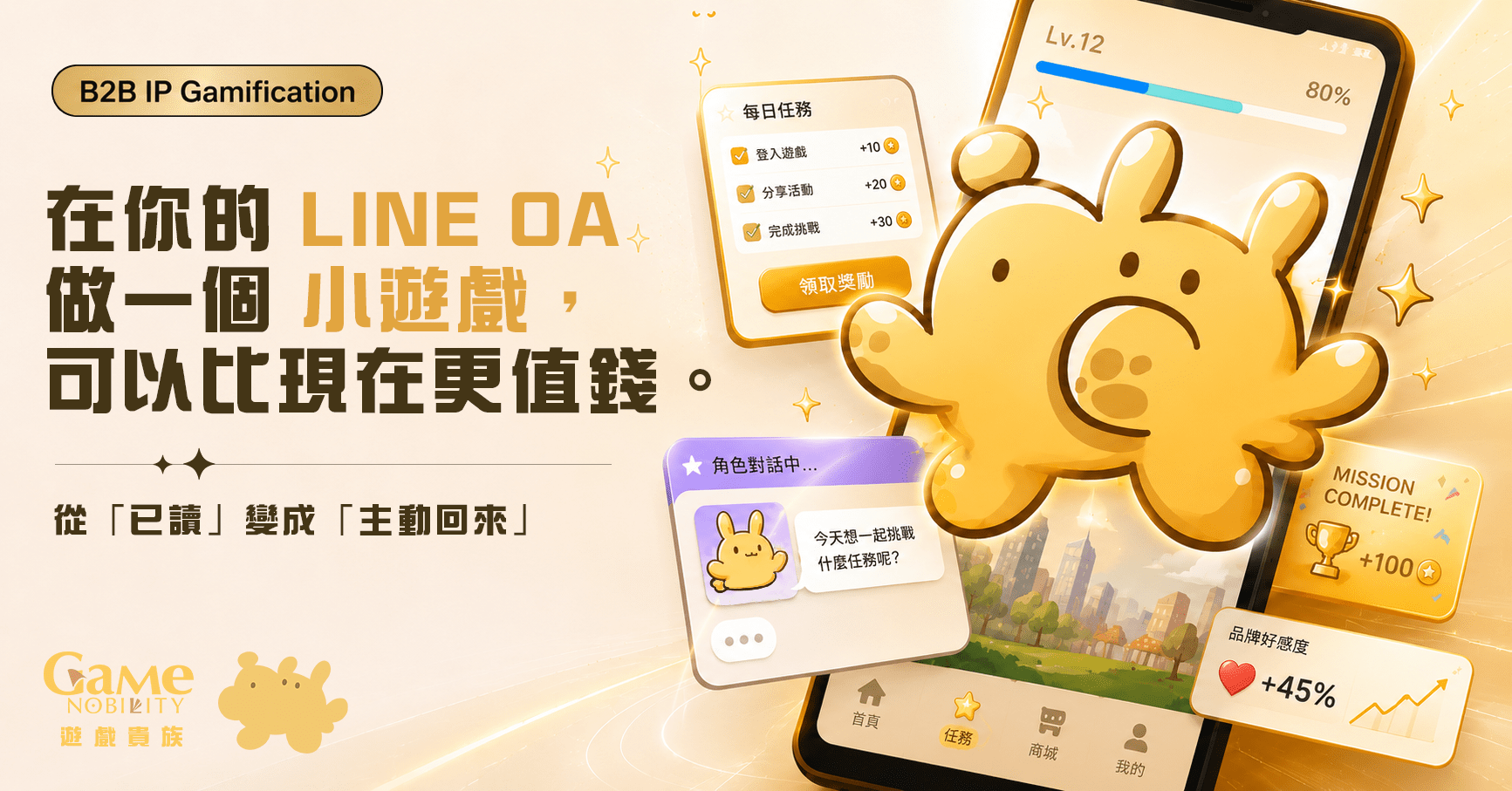
Have you ever run a campaign on your own LINE Official Account?
Picture this: there's a mini game inside your LINE OA. Users don't come in because they saw an ad. They come in because a friend sent it to them saying, "This is so you. I want to see your result!" They play, and halfway through they realize the game is about something from their real life, a feeling only people like them would get. They finish, and then they do the very thing you hoped they would: redeem something in store, fill in their details, or send the game to another friend.
Three months later, you open your data and find that these users don't need you to spend more on ads to remind them. They came back on their own, and they buy again twice as often as users who never took part.
This isn't a fantasy. It's what we keep delivering for our clients.
Before explaining how it's done, let's talk about a situation many companies have run into since the start of this year.
Why many brands spend money and get little back
This year, a new kind of contracting model has appeared on the market.
Someone uses AI tools to generate game visuals quickly, quotes a price that seems "fair enough", promises delivery in three weeks, and says this kind of thing is "not technically hard". It looks good to you, so you decide to give it a try.
The game launches, and the visuals look fine.
But users play once and leave. After the campaign ends, you have no data to show clearly what it achieved. Then you find it doesn't run on certain phones. You contact the vendor, and they say, "That's a LINE problem."
This isn't to say AI tools are bad. Tools are neutral, and anyone can use them.
The real problem is this: what you got is something that "looks like a game", not a game "designed to solve your problem". The gap between the two starts to show in the first week after launch, and three months later the data makes it very clear.
Clients who have the right mindset, a budget and a real wish to do gamification well are fewer than you might think. It's not that they don't see the value of gamification. It's that the market is flooded with cheap, surface-level offers, making it hard for clients to tell how the options in front of them really differ.
This article is here to make that difference clear.

There are people in your LINE OA waiting for you to give them a reason
Your LINE members are not strangers. By adding you, they've shown some level of trust or curiosity. That makes them more valuable than any ad audience. You don't need to convince them who you are. You just need to give them a reason to come closer on their own.
The problem is that most brands simply send these people regular broadcast messages and wait for a response. The messages feel one-way, each campaign ends when it ends, and the next one starts from zero again.
"What gamification does is turn this one-way broadcast relationship into a two-way interaction that is remembered and keeps building over time."
Users don't just "see you". They "do something together with you".
Here are a few real projects we've worked on, so you can see what this looks like in different situations.
Three different industries, one logic
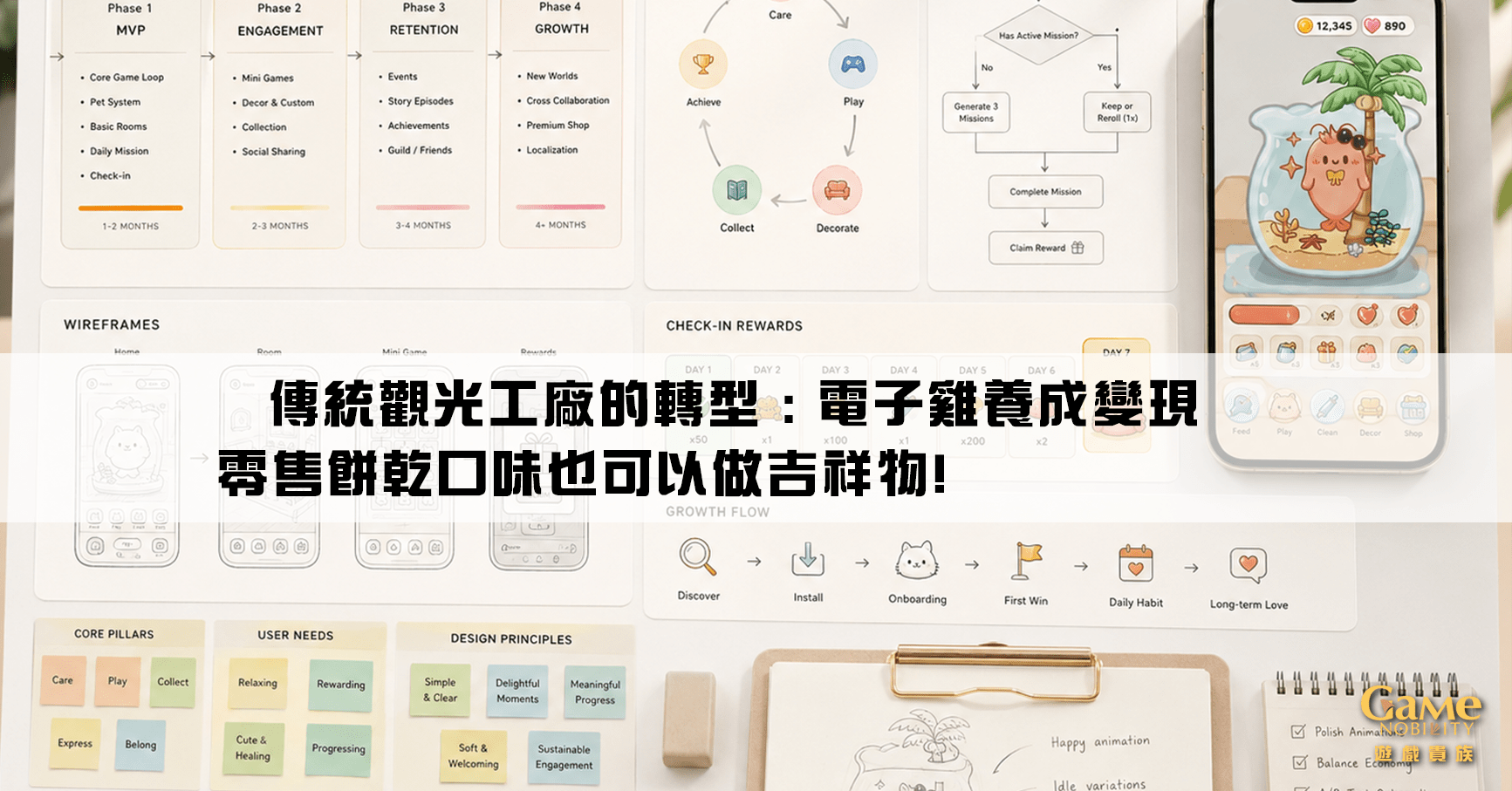
Transforming a traditional factory tourism site
A factory tourism site with deep manufacturing craft wanted to bring in more visitors and build longer-lasting relationships between them and the brand.
We designed a gamified experience that runs both online and offline. People who haven't visited yet can play in LINE first, with a virtual pet, daily fortunes and personality quizzes. Along the way, they naturally join as members, and the progress and points they earn can be redeemed on site for limited-edition items.
For people already on site, the guided tour includes challenge missions. Completing them earns gifts from staff, while guiding visitors to join as LINE members, so the visit is not the end but the start of an ongoing relationship.
After they leave, LINE sends members-only campaigns from time to time. Game points are tied to real-world redemption, so there is always a reason to come back.
As a result, online traffic and on-site visits drive each other. Each campaign no longer starts from zero with strangers; instead, it keeps deepening relationships within a member base that already has an emotional connection.
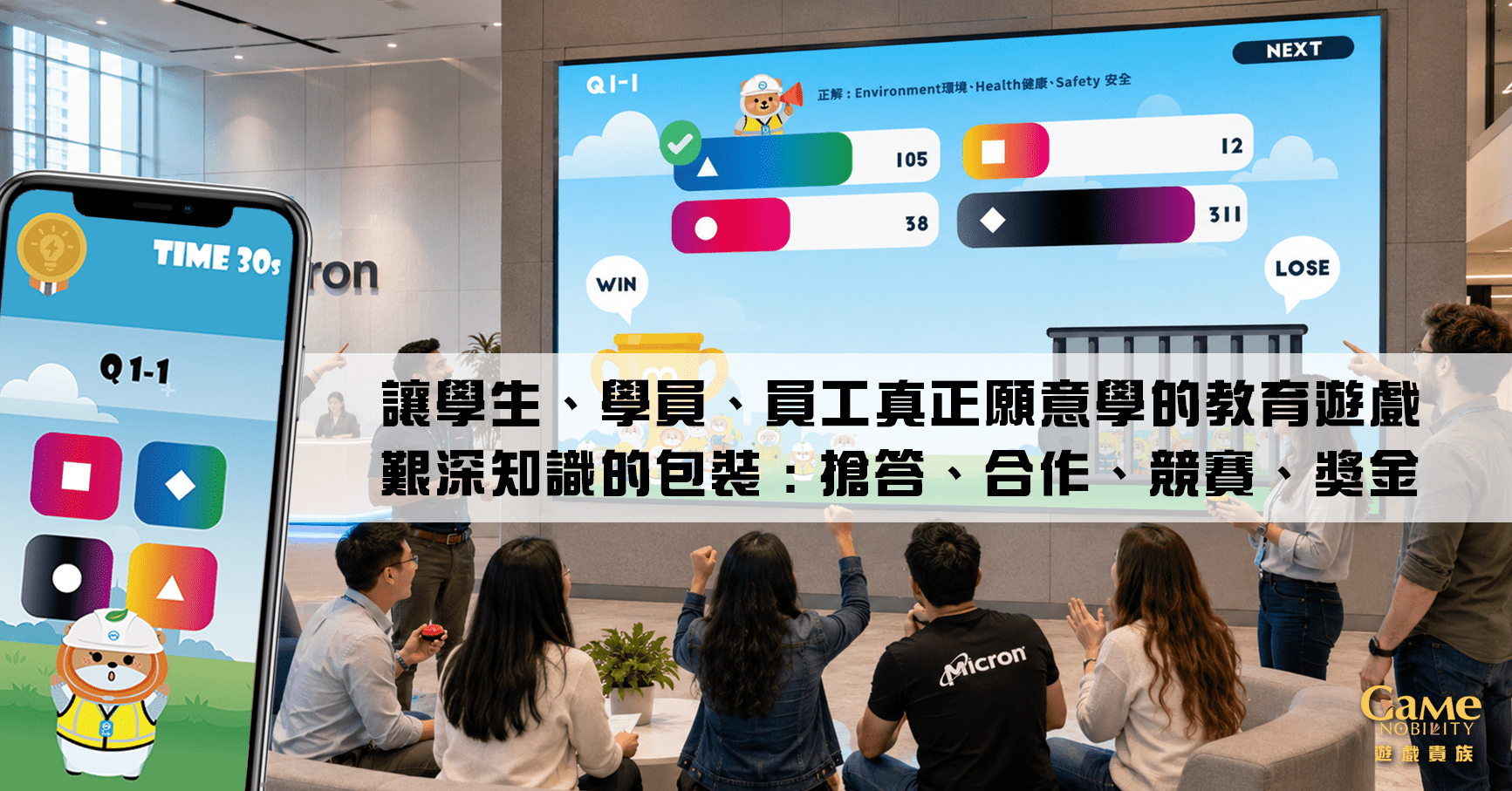
Educational games that students, learners and employees actually want to play
Educational content always has the same problem: it matters, but it isn't fun. Children can't get through it, employees want to close training courses as soon as they open them, and customers skip product manuals from start to finish.
Gamification doesn't make content simpler. It builds in the motivation to keep going. The difficulty curve of levels, the timing of rewards and how players are encouraged after failing all directly affect learners' completion and retention rates.
We've built knowledge exploration for preschoolers, public education on government policy and corporate compliance training. In every project, the depth of the content was kept, but the barrier to getting started was designed to be low enough that once-reluctant audiences began to engage. Some training courses saw completion rates rise from under 30% to over 90%.
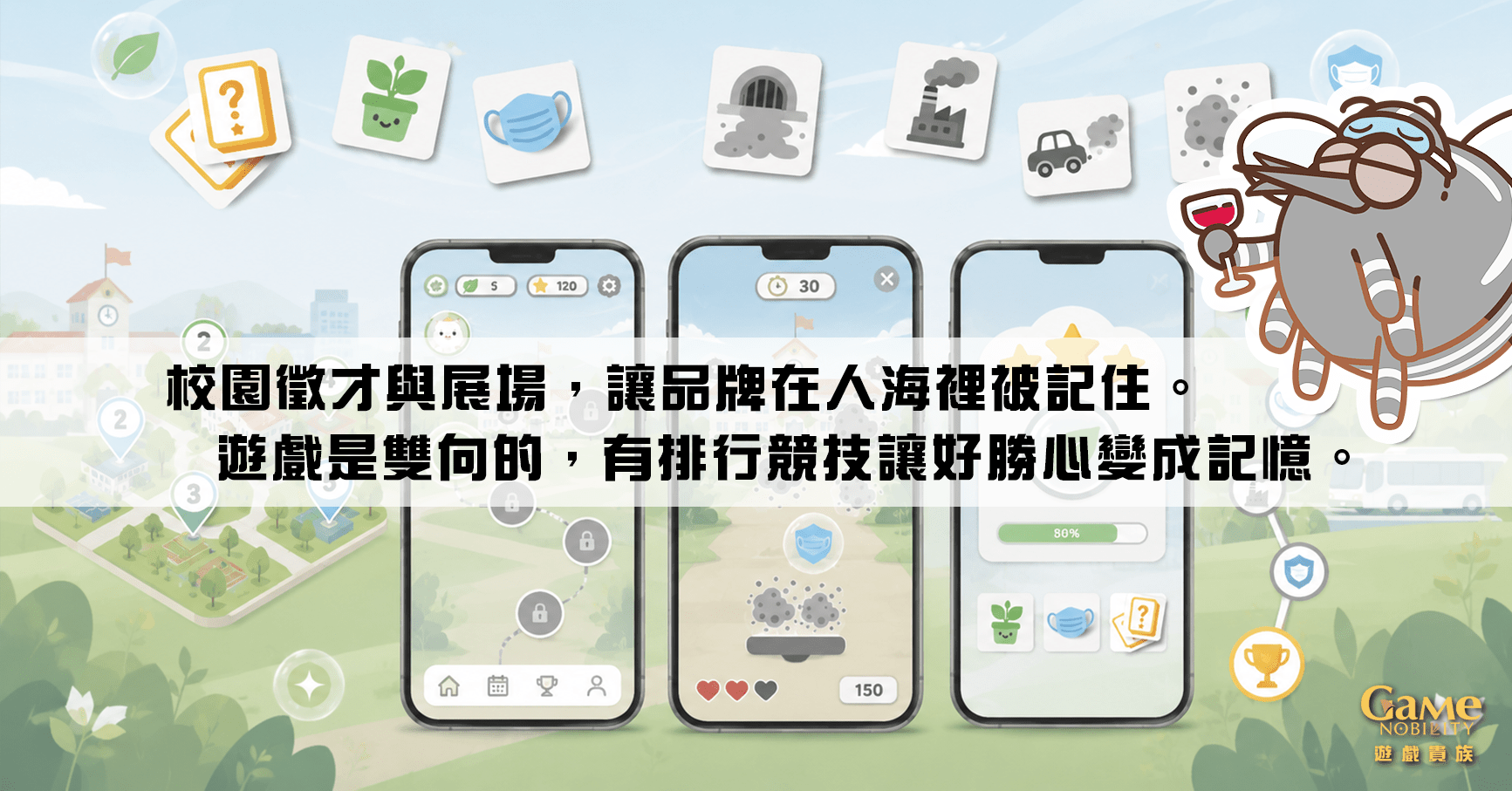
Campus recruiting and trade shows: make your brand memorable in a crowd
Trade shows and campus events share one problem: there are too many booths, and each person's attention lasts only a few seconds.
A well-designed gamified entry point can get people to stop within seconds. With LINE login, there's no need to fill in forms by hand; interest confirmation and data collection happen naturally during play. People who played remember you. People who didn't, don't.
That difference becomes very clear when you sort through your lead list after the event.
The real difference happens before the game starts
Now that you've seen the cases, here's why these projects achieved those results, while "games quickly generated with AI" usually don't.
The gap isn't in the visuals. It's in the strategy.
Before taking on a LINE mini game project, we first clarify a few things: how your audience actually behaves on LINE, in what situations they'd open this game, and what first screen would make them keep going instead of closing it. The action you want users to take needs the right mechanics to guide it. The goal isn't "make the game fun", but "make the fun end exactly at your goal". Data tracking has to be designed in from the start. We'll analyze, recommend and set it up for you, or you can choose which user data to record. Either way, you can't wait until after launch to think about which numbers to look at.
Many vendors skip this early work because it isn't on the quote. We know how valuable a well-used LINE OA can be, so we want to share that success with you, the reader. As long as you're willing to invest in this "insurance", we'll make sure this valuable back end is done right.
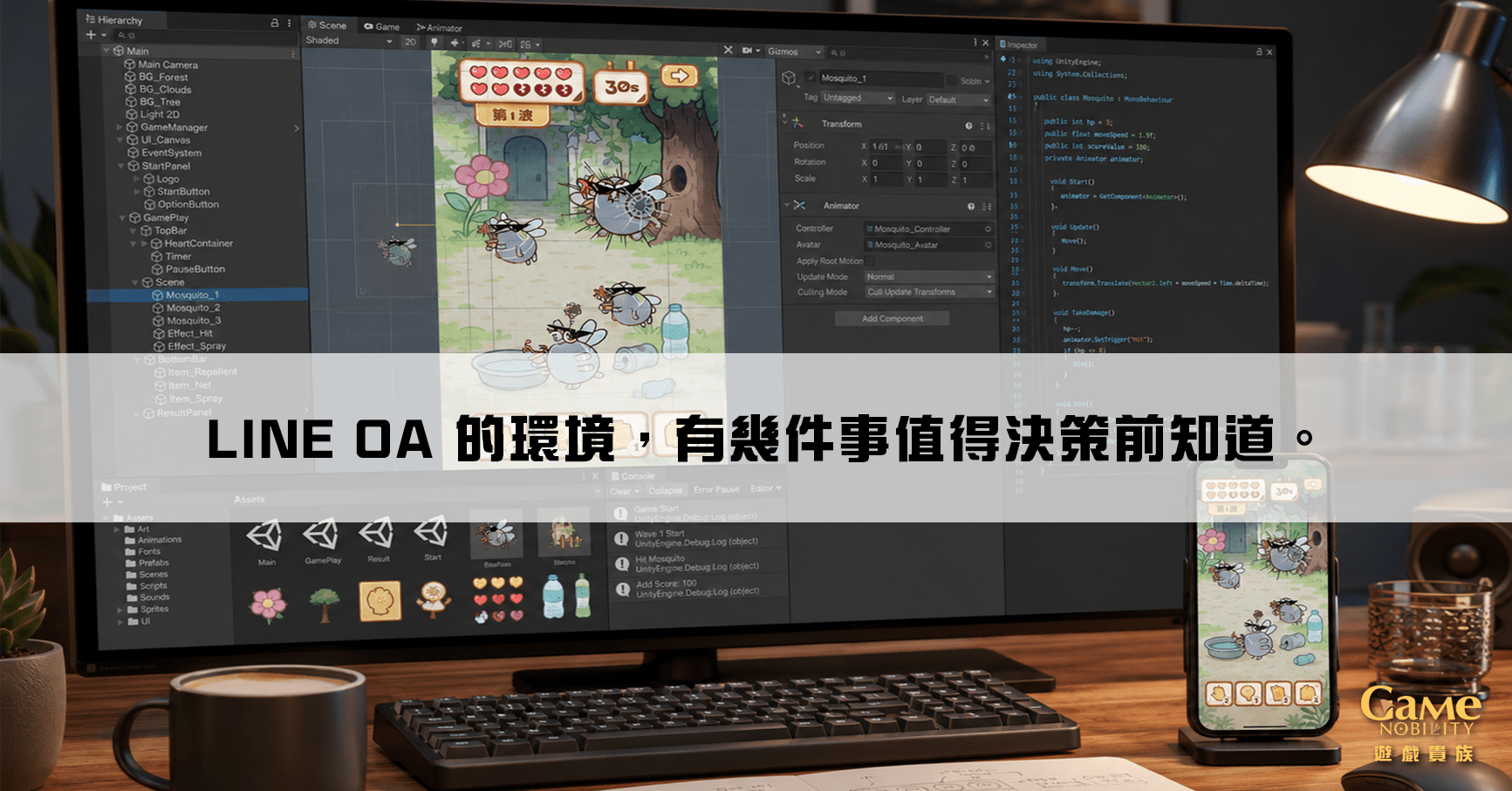
What to know about the LINE OA environment before you decide
LINE mini games run in the LIFF environment. LINE on iOS and Android behaves differently in some ways, LINE updates sometimes break features that used to work, and sound, animation and certain permissions all need to be tested one by one on different devices.
Saving user progress, designing sharing mechanics, and prize draw or coupon features all need to be considered at the planning stage, not patched in after development is done.
We use Unity for creative cross-platform interactive experiences and Cocos Creator for robust, lightweight web games. We've co-developed a new development engine with Meta and built game content on Roblox for Western markets. Different projects need different technology choices. This technical range lets us tell you which approach truly fits your goals, rather than using one toolset for every problem.
We've also taken on projects that other companies got wrong, where clients came to us for a rescue. After each assessment, we tell the client exactly where things stand: where the problem lies, whether fixing it is worth it, and what the logic would be for rebuilding. Often, rebuilding is more cost-effective than patching. We explain the reasons clearly and let the client decide.
From the very first conversation, GameNobility only promises what we can deliver.
What your LINE OA could look like a year from now
If you seriously invest in gamifying your LINE OA this year, a year from now your brand will have something hard to copy: a base of members who have built a real relationship with you through interactive experiences, and a set of interaction mechanics you know work for them and can keep optimizing.
"This is not something ads can buy. It's a brand asset that has to be designed, executed and continuously iterated."
We're looking for clients who invest in their LINE Official Account as a long-term brand tool, not clients who only want to run a one-off campaign.
If you've read this far, you may already have a rough picture in mind of how your audience might feel differently if your brand had an interactive experience like this. That picture is where our first conversation starts.
Want to know how to put a game in your LINE OA? Let GameNobility build it for youFAQ
Q: My LINE OA doesn't have many followers. Is gamification still a good fit?
Follower count isn't the only threshold. Activity and audience quality matter more. An account with 3,000 genuinely engaged followers is often more worth gamifying than one with 30,000 silent followers. In our first consultation, we'll assess your current audience together. If the timing isn't right yet, we'll tell you directly and suggest what to do first.
Q: Roughly how much budget does a LINE OA mini game need?
Games vary widely in scale and features, so there's no one-size-fits-all quote. A lightweight interactive experience and a long-term solution with a full membership system, data tracking and offline integration have completely different cost structures. After our first conversation, we'll propose a feature scope and a rough estimate based on your goals, so you know exactly what the money buys before you decide. If budget is limited, we can also plan an MVP to launch first, test the market response, then expand.
Q: After launch, can we maintain the game ourselves, or do we always need you?
We deliver full technical documentation, and clients can usually handle simple content changes (swapping prizes, editing copy) themselves. But LINE updates regularly, LIFF compatibility needs ongoing monitoring, and interpreting data and iterating the design also need dedicated people. We offer long-term maintenance plans, but they're never mandatory. You can manage things yourself after launch and bring us in when needed.
Q: We had someone else build one before, but it didn't work well. Can you take it over and improve it?
We can assess it. We've taken on many projects like this. The first step is diagnosing the problem: is it the strategy, the technical architecture or the game mechanics? The answer decides whether fixing or rebuilding is more cost-effective. We'll tell you our findings directly and won't recommend unnecessary work just to win the project.
Q: How long does development take? We have a campaign deadline.
A lightweight interactive game can launch in as little as six to eight weeks. A solution with a full back end and data tracking usually takes three to four months. Time pressure is a real constraint, so our proposals include a very specific schedule with sign-off points for each milestone. If the timeline is truly tight, we'll tell you what can and can't be done in that time, rather than promising something we can't deliver.
Q: I'm not sure gamification works in our industry. Have you done anything similar?
We've worked across traditional manufacturing, retail, tourism, education, government, tech hardware, food and beverage, lifestyle and more. If your industry is on that list, we can almost certainly show you the design logic from a similar project. If it isn't, that's exactly the kind of new field we're interested in. As long as your audience is on LINE, gamification can find a form that fits you.
Q: Can we outsource only part of the work? For example, we have our own design team and only need you for development.
Absolutely. We offer a modular way of working and can take on development, art production, game design or any part you need to fill. We also have plenty of experience picking up work, so we can continue from what other vendors have already completed. Before we start, we assess the technical and communication costs of the handover and only begin once we've confirmed it's feasible.
Your next step
You don't need a complete requirements document, a fixed budget or even certainty that this is right for you.
Bring us your questions. The first consultation is free, and we usually reply within two business days.