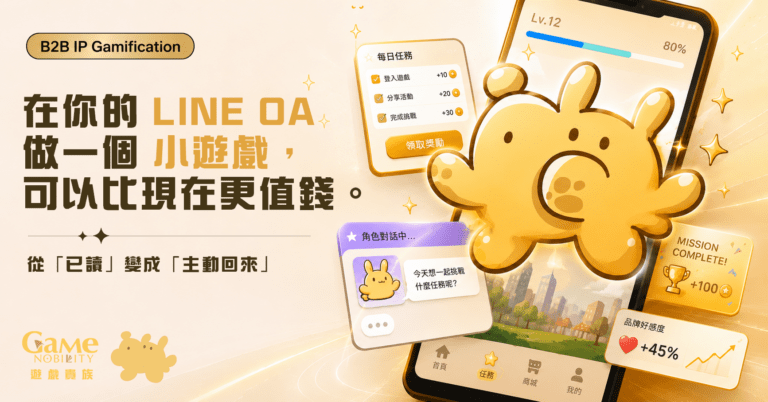
Why do people take a virtual gem seriously? The human roots of brand interaction, seen through Homo Ludens

GameNobility | Why people commit to games
In 1938, the Dutch historian Huizinga wrote in Homo Ludens that play is older than culture. Today, about 3.5 billion people around the world play games. If a brand wants to build relationships with people, rather than first asking "should we make a game?", it should first understand: why are people willing to play?
Key points in 30 seconds
- The core of a game is not the prize, but "voluntarily accepting a challenge with rules."
- Good brand interaction creates a temporary "magic circle": clear rules, instant feedback and meaningful outcomes.
- Visuals and narrative decide whether players step into that circle; mechanics and smoothness decide whether they stay.
Play is older than culture
In Homo Ludens, Huizinga argued that play is not a by-product of culture but one of its sources. Law, ritual, art and sport all carry traces of play: rules, a playing field, winners and losers, and a stretch of time set apart from everyday life.
Later game design research called this "space set apart from everyday life" the magic circle. Once inside, players willingly accept its rules, take a virtual gem seriously, and stay up late for a kingdom that does not exist.
Work meetings have rules too, but few people stay up late for a meeting.
"The difference: games are voluntary."
"Voluntarily overcoming unnecessary obstacles"
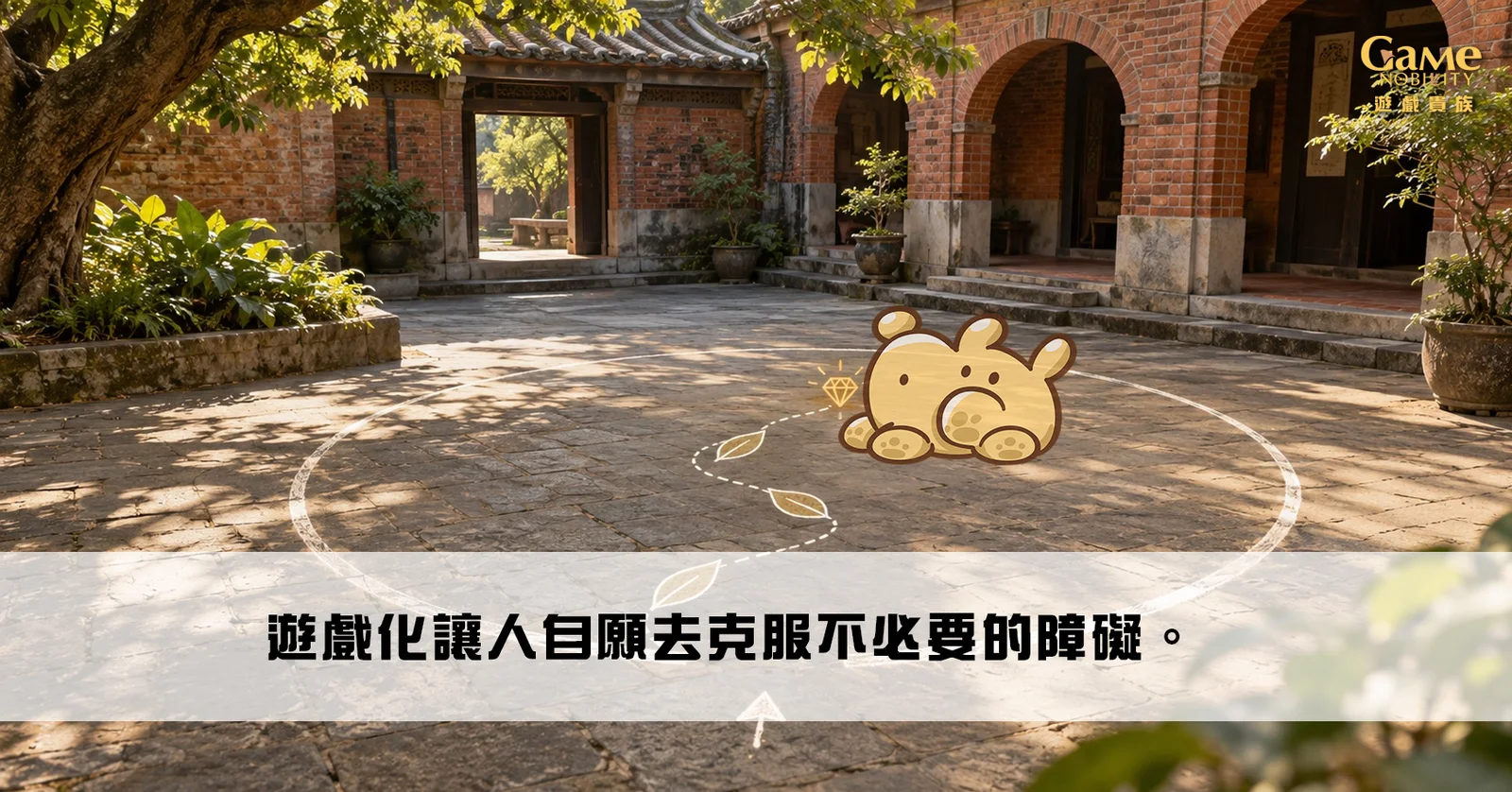
In his 1978 book The Grasshopper, the philosopher Bernard Suits gave a definition of games that is still widely quoted: playing a game is the voluntary attempt to overcome unnecessary obstacles.
In golf, you could just drop the ball into the hole, yet we insist on hitting it with a club from 400 meters away. The obstacle itself is the fun.
Applied to brand interaction, this line makes a great checklist: are the levels you design obstacles players are "willing" to take on, or tasks the brand forces on them? The first is a game; the second is filling out a form.
What 3.5 billion players means: your customers are already players
Newzoo estimates there are about 3.58 billion gamers worldwide in 2025, most of whom play on mobile. That means your customers, colleagues and managers are very likely playing games every day.
This cuts both ways. The good news: you do not need to teach interaction; everyone already knows how to tap, swipe and clear levels. The bad news: they have played good games, so they are brutally honest about clumsy interactions and will close them within three seconds.
Aesthetics are the ticket in: visuals, narrative and pacing
Players usually take just a few seconds to decide whether to step into the magic circle. In those seconds, they are not looking at mechanics but at whether the visuals have personality, the characters have expression and the world has warmth.
Our original and collaborative works often start from Taiwanese culture: Sunny Cafe is about coffee and everyday life, Romance 1930 returns to an era of Taiwan's history, and BarIsland turns island and cocktail culture into characters and stories. The topics differ, but the method is the same: first find a genuine cultural angle, then let the visuals and narrative speak for it.
Japanese aesthetics have the concept of "ma," meaning blank space and pauses. Interaction design is the same: not every second needs to be packed with effects. Give players room to breathe and think, and the experience will be remembered.
The magic circle is fragile: smoothness is the experience
Loading too long, a button that does not respond, a screen that stutters for a moment, and the magic circle breaks. Players instantly go from "I am on an adventure" back to "I am using a slow web page."
So the technical team's job is not just to make features work, but to keep the experience uninterrupted: control asset sizes, test on different phones and browsers, and pay special attention to performance in in-app browsers such as LINE. Invisible smoothness is the best art.
Three questions for brands

1. Why would players "voluntarily" step in?
2. Can the rules be explained in one sentence?
3. After playing, how has their understanding of your brand, product or knowledge changed?
If you can answer all three questions, the interaction has a reason to exist. If not, perhaps a better format is an animation, an interactive web page or a good video. Our position has always been: start from the goal, then choose the format.
Want to apply this approach to your project?
Share your goals, audience and planned launch date, and we'll put together a recommended plan and estimate based on scope.
- Fill in the commission form: https://www.gamenobility.com/commission-request-contact-form/
- See IP character gamification case studies and how we price them: https://www.gamenobility.com/#need-ip
FAQ
Q1: Does brand interaction always have to be a game?
Not necessarily. Start from your communication goals and audience; sometimes an animation, an interactive web page or a personality quiz is a better fit. Games suit content that needs participation, choices and feedback.
Q2: How is gamification different from making a game?
Gamification brings game elements and thinking into situations that are not games, such as training, memberships or campaigns. Making a game means the game itself is the product. The two require different design depth and budgets.
Q3: Do humanities or art topics work as games?
Yes. History, culture and art already come with worlds and stories. Through characters, choices and exploration, players can understand the content in a more active way.