Marketing 5.0: master MarTech to fully upgrade your brand's digital transformation!

With omnichannel strategies everywhere today, marketing teams no longer face the challenges of just one platform or channel. Fast product updates, more complex channels and changing user journeys make marketing work more "detailed" and "tedious" than ever. MarTech is not just a set of tools but an integrated solution that helps brands "work smarter". So what exactly is MarTech, and how does it relate to "Marketing 5.0"? How does it help brands stay steady through the wave of digital transformation? Let GameNobility walk you through it step by step!
✨ What is Marketing 5.0? The perfect blend of technology and humanity!
Marketing has moved from product-centered 1.0, to customer-centered 2.0, to value-driven 3.0 and digital-first 4.0. Now we have officially entered the era of Marketing 5.0: a new generation of marketing that combines "technology" with "understanding people".
Marketing 5.0 is a concept introduced by marketing guru Philip Kotler. With AI, data analytics and automation driving the way, brands must not only reach customers precisely but also put people at the center, using technology to improve customer experience and emotional connection and build more influential brand value.
How to make technology respond to people's needs, feelings and experiences. It focuses on using technology to imitate the insight and judgment of human marketers, delivering customer experiences that are more personal, more immediate and more interactive, so brands can still build deep connections with consumers in a world of information overload.
The five elements of Marketing 5.0: two disciplines × three applications
The five elements are split into "two core disciplines" and "three practical applications", which together form the framework and soul of Marketing 5.0. The "disciplines" are the underlying capabilities, data-driven marketing and agile marketing, which are the foundation for responding to market changes and understanding customer needs. The "applications" are the practical strategies and customer interactions built on top of them: predictive marketing, contextual marketing and augmented marketing.
🌟 Two disciplines:
🔸 1. Data-driven marketing
Build a data ecosystem from on-site data (member data, purchase behavior) to off-site data (Google Trends, social media data) to clarify customer needs, tag customer profiles and achieve precise "segment of one" marketing.
🔸 2. Agile marketing
Facing fast-changing markets and product cycles in the digital age, companies need to spot insights in real time and react quickly. Using data to launch promotions, iterate products or try new strategies is the key to agile marketing.
🌟 Three applications:
🔹 1. Predictive marketing
Use AI and machine learning to turn past purchase behavior into models of future trends. Marketers no longer rely on gut feeling; algorithms predict customer needs so they can plan ahead and get there first.
🔹 2. Contextual marketing
Combine sensors and location technology to deliver real-time, personalized content and notifications based on the user's current time, place and behavior, so customers meet "just the right you" "just when they need it".
🔹 3. Augmented marketing
Technology is not there to coldly replace people. Instead, AI and humans "work together" to make every customer touchpoint more thoughtful and meaningful. For example, companies can use chatbots and LINE interactive games as the first point of contact with users, creating a relaxed, fun interactive experience. It is not just about collecting data: a gamified flow gets customers to "take part on their own" and leave an emotional footprint
💻 What is MarTech? Marketing technology becomes a key tool for brand transformation!
MarTech (marketing technology) is the combination of "marketing + technology": applying tech tools (including platforms, services, strategies and more) to marketing activities to make marketing smarter, more data-driven and more efficient! Modern marketing has moved from "cast a wide net and hope" to "personalized and data-driven". The core value companies need from MarTech is to:
☑ Understand consumers
☑ Use technology to improve processes
☑ Achieve precise targeting and marketing automation
☑ Analyze data and improve efficiency and brand experience
What are the six areas of MarTech? One image explains it all!

| 📚 MarTech: the six areas | |
| Advertising and promotion | This covers all digital advertising run with technology. Tech tools help marketers set more precise target audiences and the best times to run ads, automatically optimize ad content and creative, and provide real-time performance reports, raising return on ad spend (ROAS) and lowering cost per acquisition (CPA) |
| Content and user experience |
The core of this area is "content value" and "experience design", covering two aspects:
|
| Social and customer relationship management |
In today's social economy, brands are no longer just speakers but active participants in the conversation. This area focuses on:
Technology in the social and relationship area helps raise brand stickiness, spread UGC naturally and keep track of customer behavior |
| Commerce and sales |
This area focuses on using technology to improve "transaction efficiency" and "operations", including:
With sales technology, brands can build a complete conversion funnel from attraction → experience → purchase → after-sales follow-up, so marketing and sales work together for the best results. |
| Data |
"Data is the soul of MarTech". Without data, precise marketing is impossible. This area covers:
By integrating and interpreting data, brands can offer personalized recommendations, cross-platform remarketing and better planning for results. It is the foundation of every marketing technology application. |
| Process integration |
As MarTech tools grow more varied, "integration management" has become an area that cannot be ignored. It mainly includes:
A good integration management system helps brands launch campaigns quickly, improve internal communication and keep all marketing work consistent and trackable. |
From "ad buying" to "content design", from "social interaction" to "sales optimization", and from "data analysis" to "integration management", the six areas of MarTech are closely linked and support each other. Together they are the key system for driving brand digital transformation and creating long-term value.
In practice | Use interactive game design and LINE mini games to cover the six areas of MarTech!
The Marketing 5.0 era is not just about ideas. It puts more weight on "real participation" and "putting technology to work".
Once a brand adopts MarTech tools, adding gamified content and interactive modules can deliver transformation results beyond anything before in these six areas:
🎯 Advertising and promotion × interactive games: make your ads "fun and eye-catching"
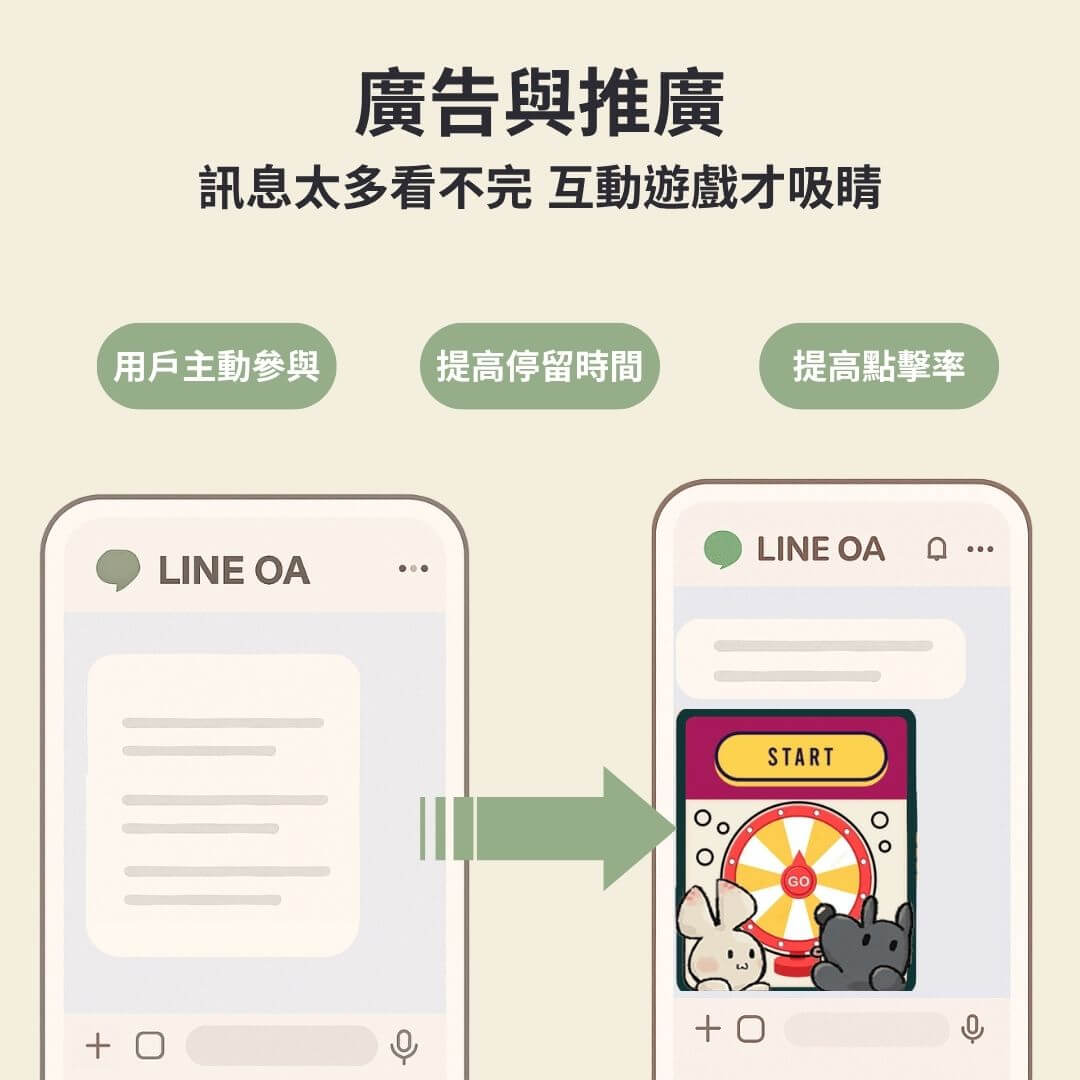
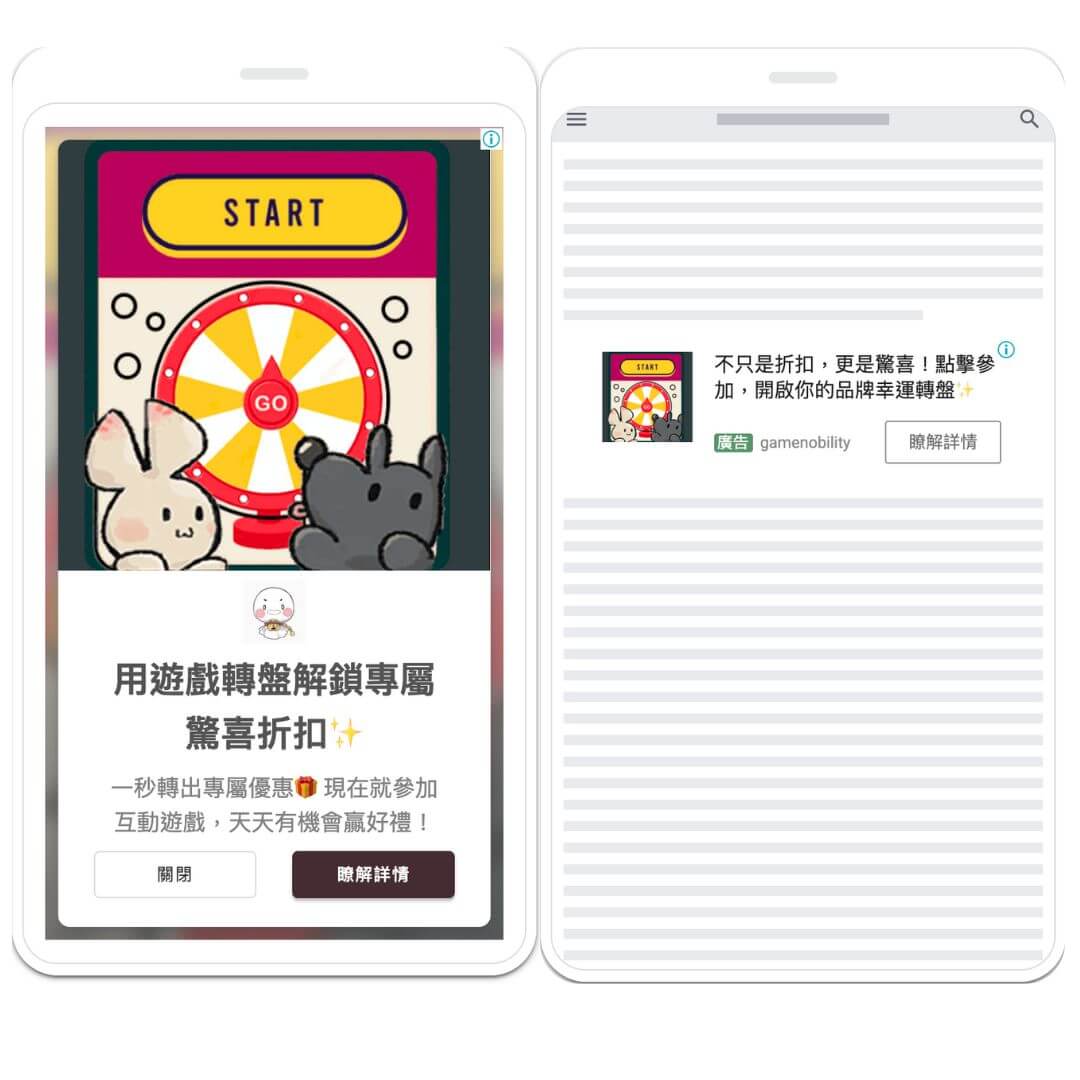
Compared with static image and text ads, interactive games draw users in to take part, increasing time on page and click-through rates.
On LINE OA you can combine personality quizzes, prize wheels, character trivia and more, then extend the game assets into major digital ad channels for high engagement and high conversion.
✨ Content and experience: make brand content truly "memorable"
Game-style experiences let consumers do more than read brand content: they take part in a story themselves.
With quiz choices, character matching and interactive stories, you can package product information and brand ideas into a memorable digital experience page, and use UI/UX design to improve the user experience. (Further reading: Real brand case studies | LINE interactive games: 2025 game experiences and a high-stickiness marketing strategy!)


💬 Social and relationships × result sharing: natural reach through UGC
Building marketing features like "screenshot and share" results, "enter the prize draw" and "limited-time coupons" into the game flow encourages users to share on social media on their own and creates buzz.
Combined with LINE CRM or member tagging, you can follow up with segmented messages and ongoing engagement. (Further reading: What is UGC? How small brands can get fans to promote them, with marketing tips revealed!)

🛍️ Commerce and sales × in-game conversion tasks: interactive games can close deals too
You can set conditional tasks in the game: finish the quiz → get a discount → go to the online store.
This interactive shopping flow can greatly raise purchase intent and repeat purchases, and it can connect to store credit or points systems to build a gamified membership marketing flow.

📊 Data × game behavior tracking: every click is the start of an insight
For every player, their clicks, choices and completion rate, all the way to whether they convert, share or add you as a friend, become marketing data you can visualize.
By integrating GA, a CDP or the LINE API, you can easily track campaign data and lay the groundwork for improving your next campaign.

Learn more about LINE data research: How do you measure campaign results? Use data analysis to review performance and improve your campaigns
🧩 Process and integration management × an all-in-one game campaign platform: from idea to data, connected automatically
Interactive games don't have to start from scratch every time. You can connect them to internal platforms such as LINE OA and CRM to automate member sync, lead records and campaign management, making your marketing more efficient and repeatable.
Technology + games + experience: the starting point for the next wave of brand digital transformation!
When MarTech meets interactive games, it is no longer just a set of tools but a new marketing force where "people × brand × data" resonate together.
Now let your brand truly put the core spirit of Marketing 5.0 into practice with LINE mini games and online interactive game design: use technology to understand people, and use experiences to create value!